
Last updated September 10, 2026
Level 1 sweep and inspection to the NFPA 211 annual standard - flue, crown, cap, and flashing checked and photographed
Chimney sweep logs do not sweep chimneys. They loosen some creosote - which then falls where a brush and vacuum still have to collect it.
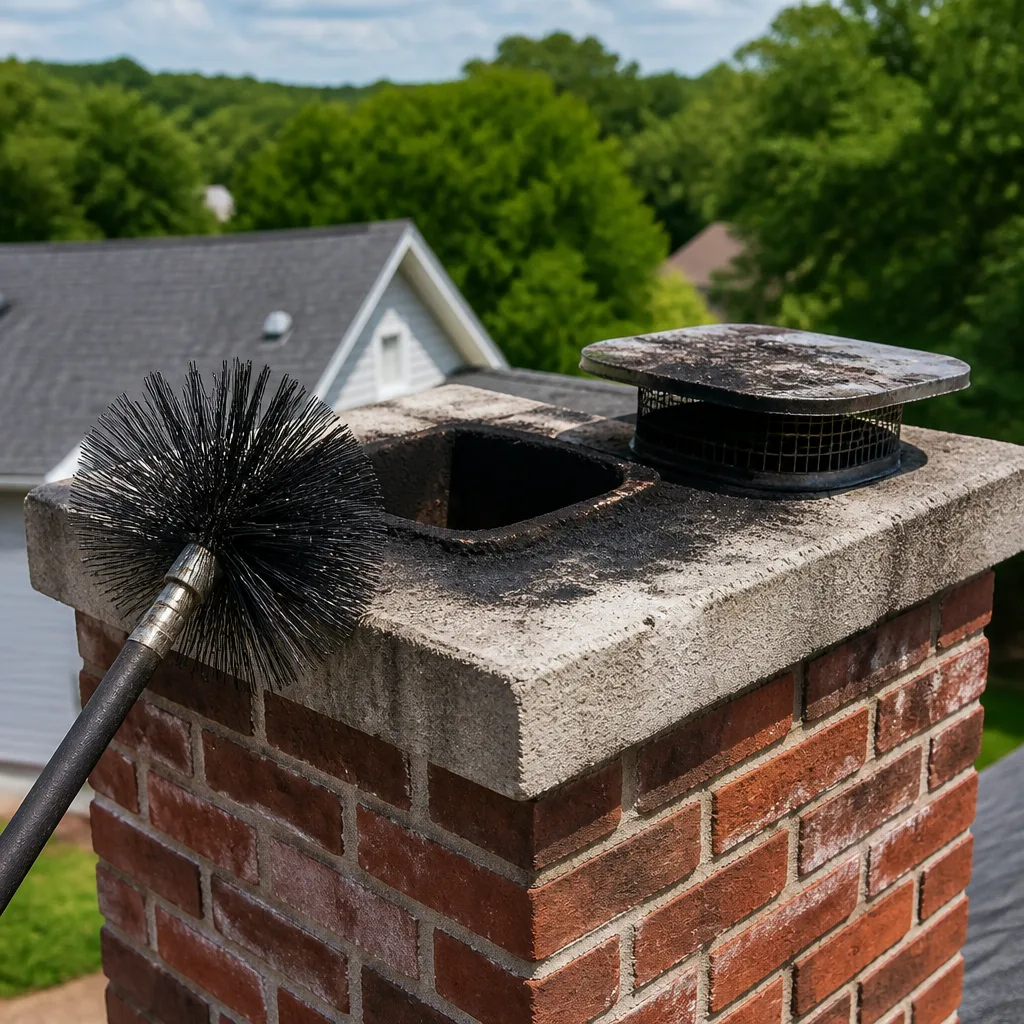
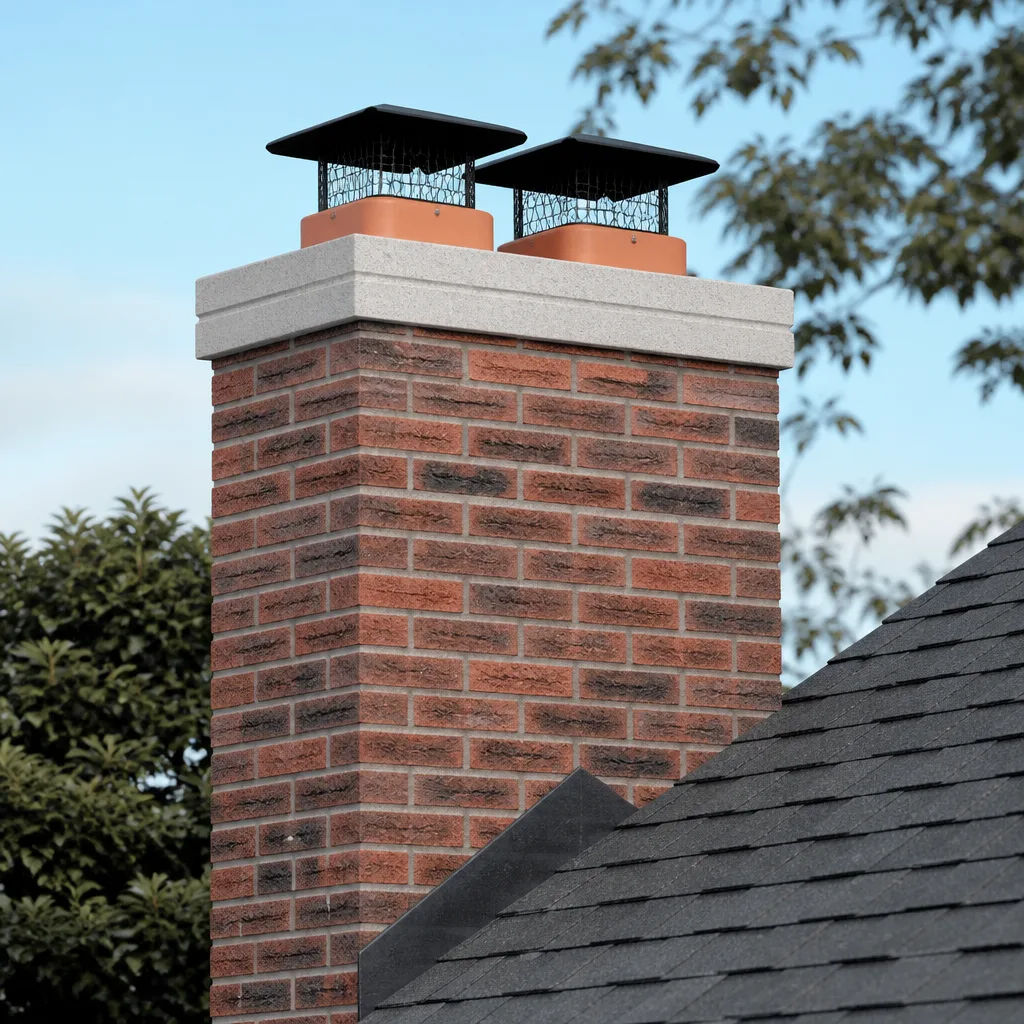
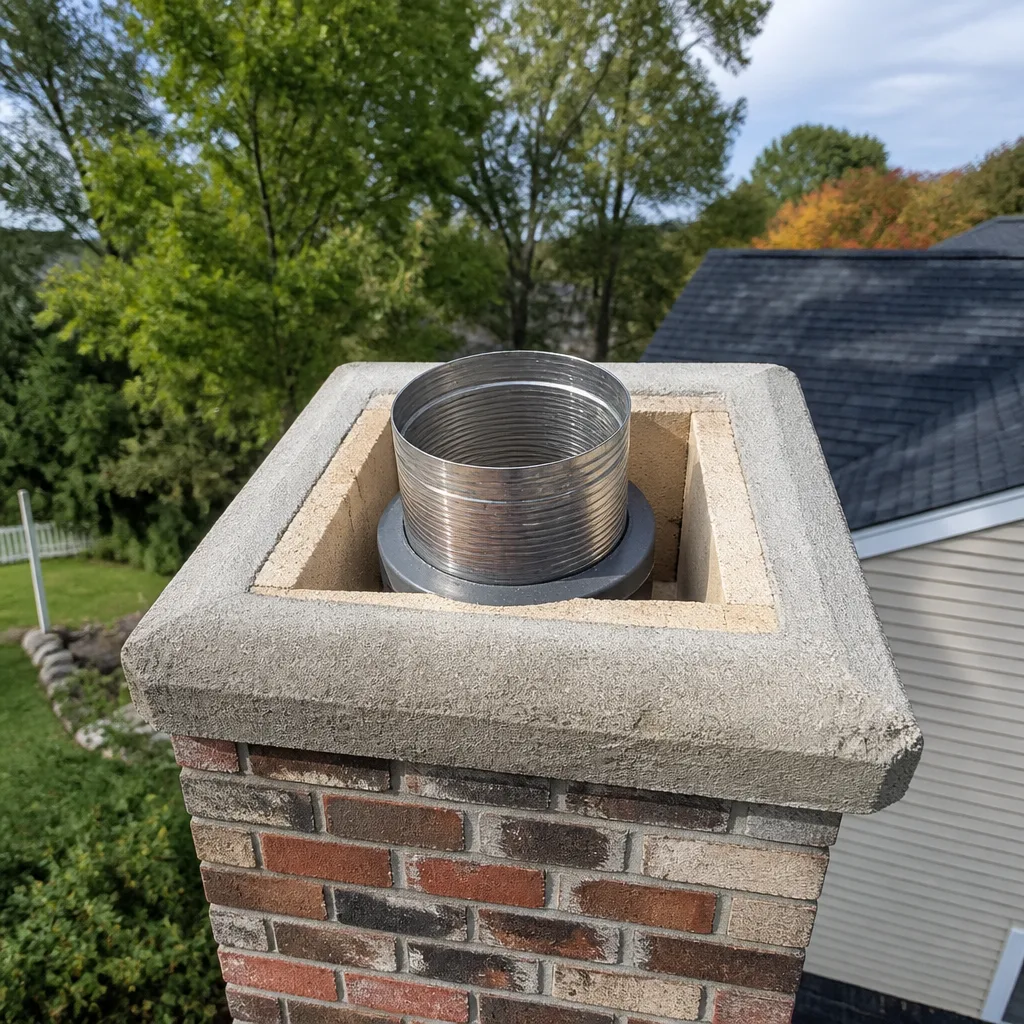
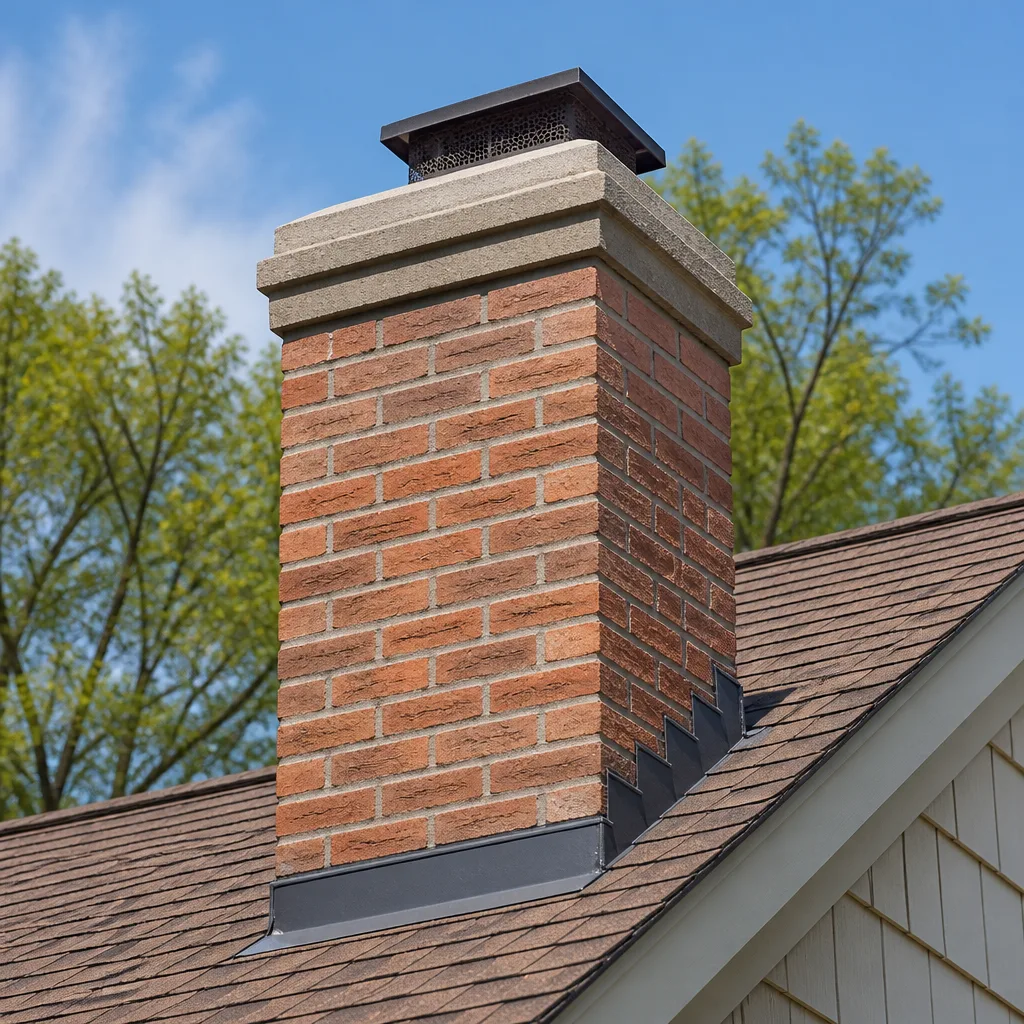
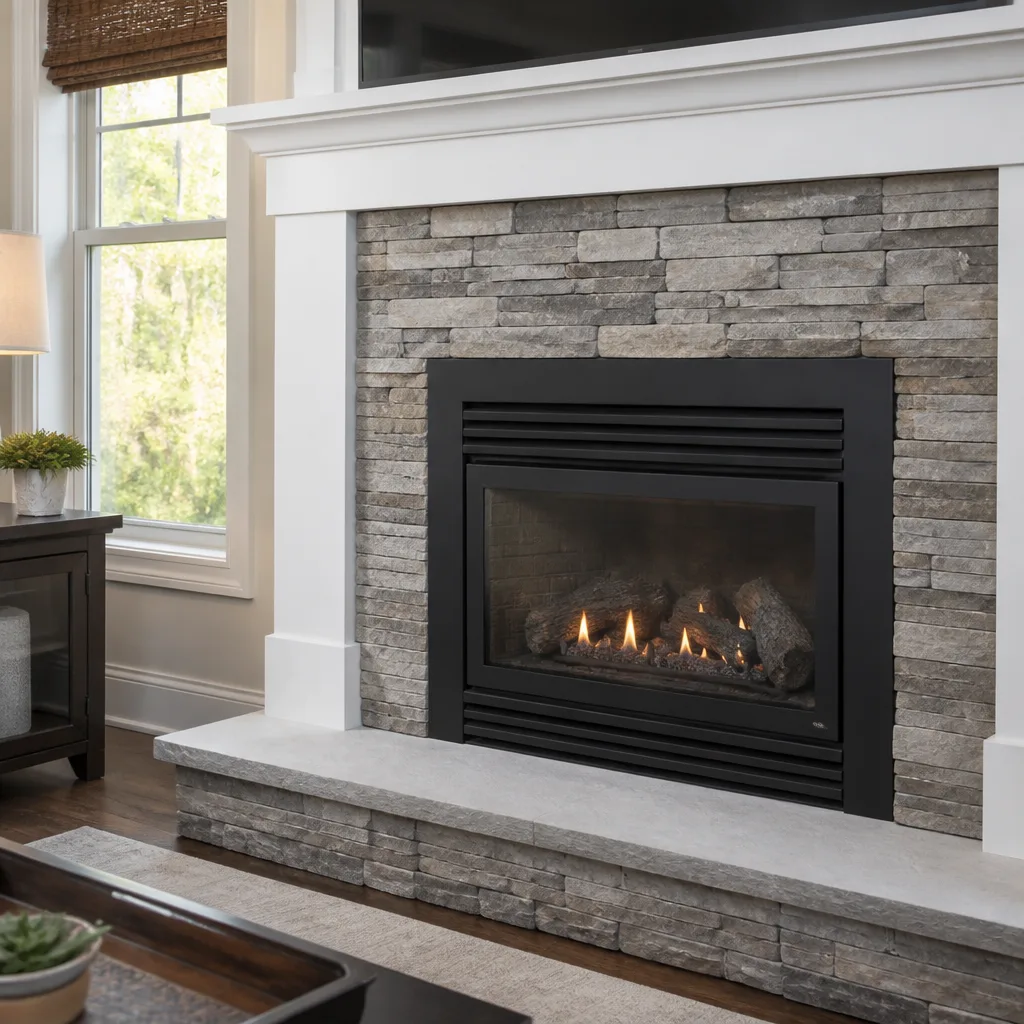
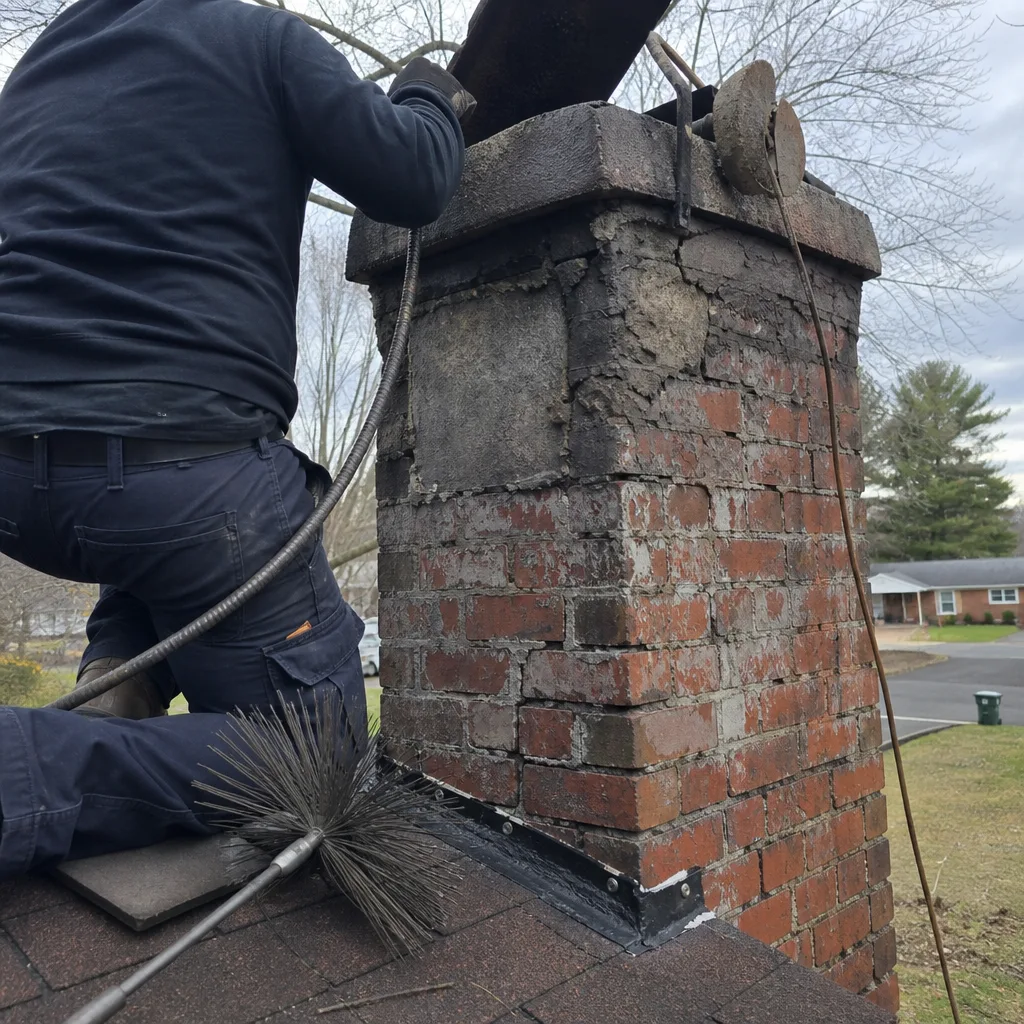 Before
 After
After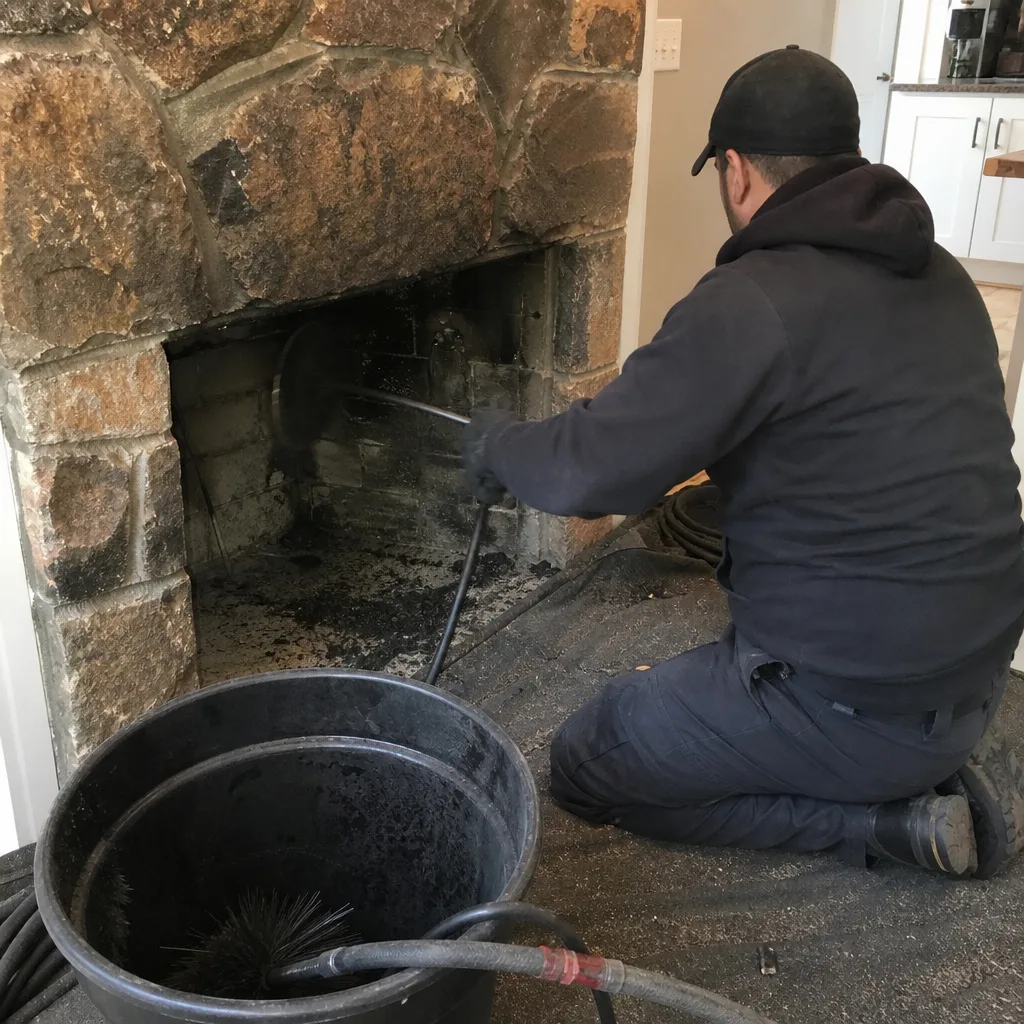 Before
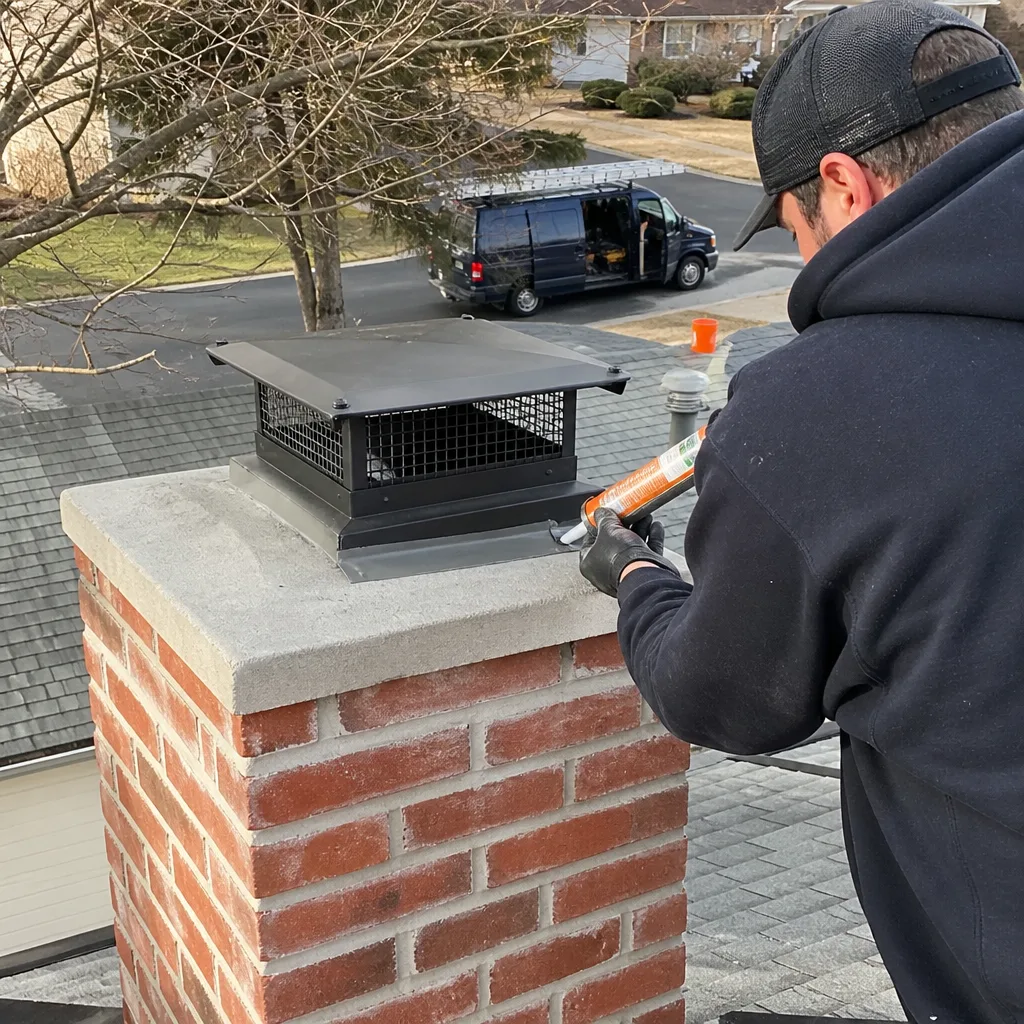 After
After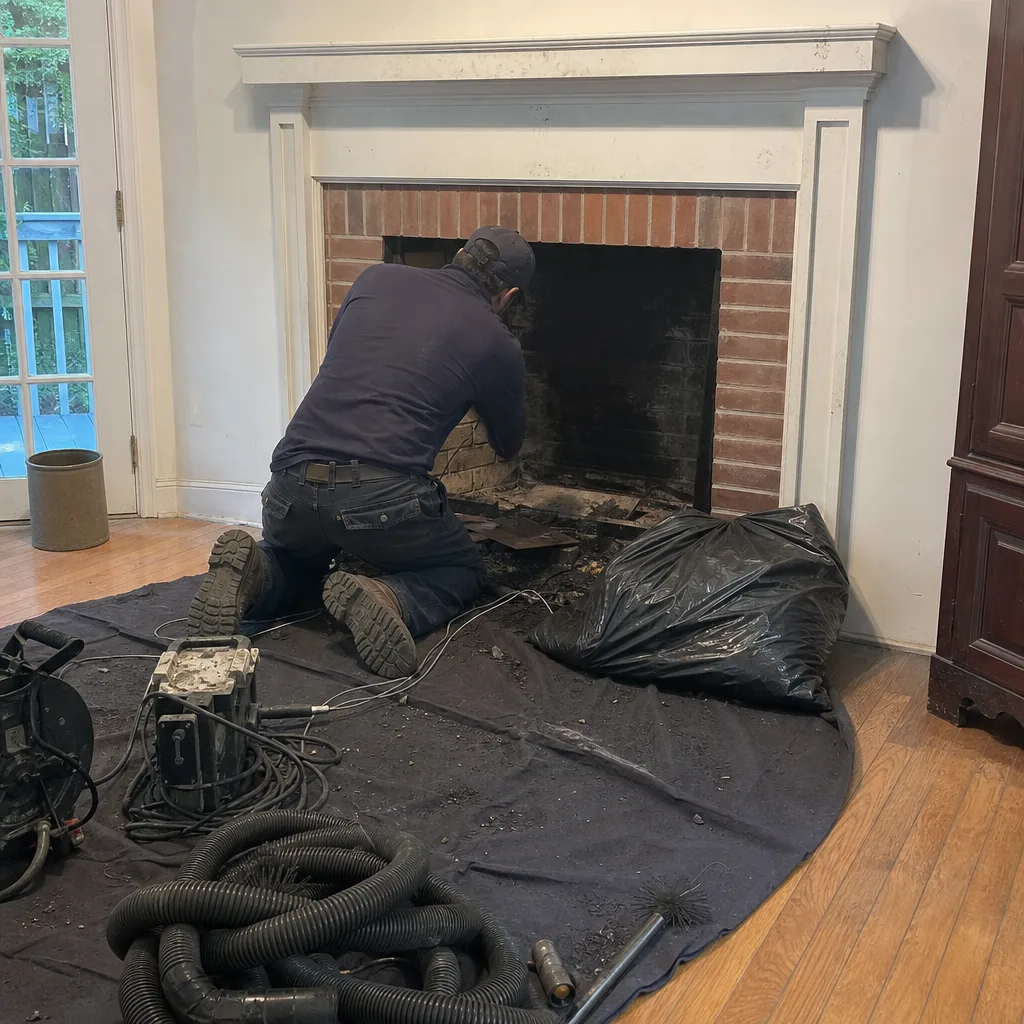 Before
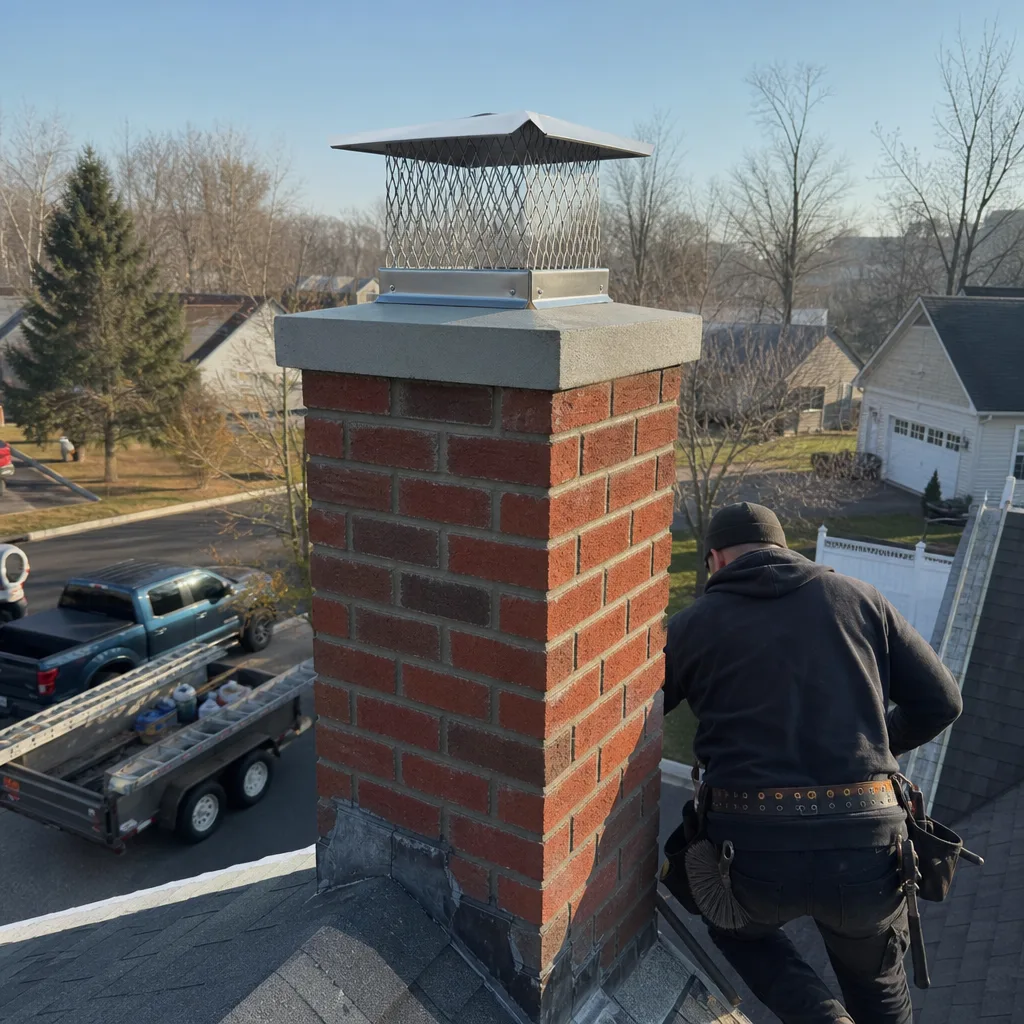 After
AfterChimney Cleaning Warning Signs: A Bridgewater Homeowner’s Reference Guide
A smoky smell in August with no fire burning is a moisture problem. The same smell in January during a fire is a draft problem. Treating them the same way wastes money and misses the actual repair, and a sweep who doesn’t ask when and how often before quoting a fix isn’t diagnosing, he’s guessing. In Bridgewater, where freeze-thaw cycles punish masonry from Finderne to Martinsville and oak-heavy cordwood burns slower than the pine many homeowners assume they’re buying, the context around a symptom matters as much as the symptom itself. This guide teaches you to read your chimney’s warning signs like a craftsman reads a flue: with attention to season, fuel, and what the house is actually trying to tell you.
Quick Answer
The five chimney warning signs that require prompt attention are: persistent smoky odors that change with season, visible creosote buildup thicker than 1/8 inch, white efflorescence staining on exterior brick, animal sounds or debris in the flue, and smoke spilling into living spaces during normal fireplace use. In Bridgewater’s climate, moisture-related symptoms often appear in late summer after humid months, while draft problems surface when temperatures drop and homeowners first light fires in fall. A Level-2 camera inspection by a certified sweep separates symptoms that cleaning resolves from those indicating liner, crown, or structural repair. For a full breakdown of proper cleaning practices, see The Complete Guide to Chimney Cleaning in Bridgewater.
Table of Contents
- The Symptom Matrix: Reading Smell, Smoke, Sound, and Sight in Context
- Efflorescence: Why White Staining Means Structure, Not Soot
- Draft Problem or Liner Problem: The Expensive Difference
- Animals, Settling, or Wind: What You’re Hearing in the Flue
- The Stop-Use Threshold: Delay, Schedule, or Don’t Light Another Fire
- Bridgewater’s Seasonal Risk Calendar: When Problems Emerge
- What a Proper Inspection Actually Shows You
- Common Mistakes to Avoid
- When to Call a Professional
- Frequently Asked Questions
The Symptom Matrix: Reading Smell, Smoke, Sound, and Sight in Context
Most chimney warning sign guides fail because they treat symptoms like a grocery list: smoky smell equals creosote, end of story. In forty-two years of sweeping chimneys across Somerset County, we’ve learned that the same symptom points to different problems depending on when it appears, what you’re burning, and how your house breathes. Here’s the diagnostic framework we use when a Bridgewater homeowner calls with a concern.
Smell: The Season Decoder
Summer smell (no fire burning): Musty, acrid odors in July or August typically indicate moisture intrusion. Rain entering through a cracked crown or deteriorated flashing has mixed with creosote residue, creating an environment where mold and bacteria thrive. The smell intensifies on humid days. In Bridgewater’s August humidity, we’ve seen this problem spike in homes near the Raritan River basin where groundwater pressure pushes moisture through porous brick.
Fall smell (first fires): A sharp, chemical odor when lighting early-season fires usually means accumulated creosote is heating up. This is normal in small amounts but concerning if it persists past the third fire. It tells you the last cleaning left residue, or burning habits created glazed creosote that standard brushing won’t remove.
Winter smell (during active use): Smoke smell in occupied rooms during a fire points to negative pressure or a blocked flue. Modern Bridgewater homes with tight envelopes and powerful kitchen exhaust fans often suffer this; the house is literally pulling smoke backward through the chimney.
Smoke: Where It Goes Matters
- Smoke spilling from the fireplace opening: Draft failure, blocked flue, or cold chimney syndrome. Check: is the damper fully open? Is the fire built too far forward? If yes to both, call for inspection.
- Smoke stains on the face of the fireplace above the opening: Long-term draft issues or a fire built too large for the firebox. The pattern shows years of gradual spillage, not one bad fire.
- Smoke smell in upstairs rooms: Often misdiagnosed as a flue problem. More commonly, this is a chase leak where smoke gases migrate through construction gaps in a factory-built chimney’s enclosure. We’ve traced this in Bridgewater’s 1980s-era homes in the Chimney Rock area where chase covers failed after twenty-five years.
Sound: The Urgency Spectrum
Scratching or chirping: Active animal occupation. Squirrels, raccoons, and chimney swifts are common in Bridgewater’s tree-heavy neighborhoods. Stop use immediately; nesting materials are a fire hazard and animals can block the flue entirely.
Clicking or ticking that follows sun patterns: Thermal expansion of a metal chimney or deteriorating clay flue tiles. Usually not urgent unless accompanied by visible cracks.
Howling or moaning: Wind interacting with a missing or damaged chimney cap. Annoying, not dangerous, but the missing cap admits water and animals.
Sight: What Your Eyes Actually See
- Black, flaky deposits in the firebox: Normal creosote. Schedule cleaning when accumulation exceeds 1/8 inch.
- Shiny, tar-like glaze: Stage three creosote. Requires chemical treatment and mechanical removal; standard brushing won’t touch it.
- White, powdery staining on exterior brick: Efflorescence. See the next section; this is structural, not a cleaning issue.
- Rust stains on the chimney breast or ceiling: Water infiltration through the crown or flashing. Address before freeze-thaw destroys mortar joints.
- Missing or shifted bricks at the crown: Immediate professional evaluation. The crown is your chimney’s umbrella; without it, water enters the core.
The matrix only works when you share the full context with your sweep. “It smells smoky” is a starting point. “It smells smoky in August when the AC runs, and we burn oak from a guy in Branchburg” is a diagnosis waiting to happen.
Efflorescence: Why White Staining Means Structure, Not Soot
We see this misdiagnosis constantly in Bridgewater, especially in the older stone and brick homes near the historic district and along Old York Road. A homeowner notices white, chalky staining on the exterior chimney brick, assumes it’s a cleaning issue, and schedules a sweep. The sweep brushes the flue, the staining remains, and six months later the chimney is spalling brick and leaking into the attic.
Efflorescence is not soot. It is salt crystallization caused by water moving through masonry, dissolving mineral salts, and depositing them on the surface as it evaporates. The white powder you can brush off with your finger is merely the evidence; the crime is water intrusion.
What Efflorescence Tells You
The location matters. Efflorescence concentrated at the chimney shoulder (where the chimney narrows below the crown) typically indicates crown failure. Crown mortar cracks, water enters, freezes in Bridgewater’s January nights, expands, and cracks deepen. We’ve replaced crowns in chimney repair in Bridgewater where this cycle ran undetected for three winters.
Efflorescence lower on the chimney body, especially below the roofline, points to flashing failure or porous brick in need of waterproofing. In homes built before 1990 with soft Somerset County brick, we’ve seen entire chimney faces require repointing after efflorescence was ignored for two seasons.
Efflorescence inside the firebox is more serious: water is entering from the top and running the full flue length. This indicates multiple failure points and demands immediate comprehensive evaluation.
The Repair Trajectory
Cleaning will not remove efflorescence permanently because cleaning does not stop water. The typical repair sequence we document with our Level-2 camera inspection and photo report:
- Identify water source (crown, flashing, porous brick, or combination)
- Repair or replace crown with proper concrete mix and overhang
- Replace or reseal flashing where chimney penetrates roof
- Apply vapor-permeable masonry waterproofing (we use professional-grade treatments compatible with historic mortar)
- Repoint deteriorated mortar joints with matching mix
In Bridgewater’s climate, we see efflorescence accelerate after winters with frequent freeze-thaw cycles. The winter of 2022-2023 was particularly damaging; we documented crown failures in twelve homes in the Finderne and Bradley Gardens areas where January temperatures swung from 8°F to 58°F in seventy-two hours. The salt staining had been visible the previous summer. The homeowners who called then spent roughly one-third of what the delayed callers paid after brick spalling required partial rebuilds.
If you see white staining, take a photo, note the date, and call for inspection. It is not an emergency today. It becomes one after the next hard freeze.
Draft Problem or Liner Problem: The Expensive Difference
This distinction costs Bridgewater homeowners thousands when missed. Draft problems and liner problems share symptoms: smoke spillage, difficulty starting fires, carbon monoxide detectors triggering. But their repairs diverge sharply. A draft problem might cost $200-$800 to resolve. A liner replacement runs $2,500-$5,500 in our market. Misdiagnosing one as the other is the most expensive mistake in chimney service.
Draft Problems: The House and the Weather
Draft is the pressure difference that pulls combustion gases up and out. It depends on:
- Chimney height and location: Short chimneys on the downwind side of a roof struggle in wind. We’ve solved draft issues in Bridgewater’s Green Knoll area simply by extending a chimney twelve inches.
- House pressure balance: Exhaust fans, furnaces, and tight construction create negative pressure. In modern homes near the Somerville border, we’ve seen kitchen range hoods so powerful they reverse chimney flow.
- Flue temperature: Cold chimneys don’t draft. A flue that hasn’t been used in days, especially on Bridgewater’s north-facing slopes, may need pre-warming.
- Air supply: Fire needs oxygen. A tightly sealed home may starve the fireplace.
Draft problems are mechanical and environmental. They improve when conditions change. A fire that smokes on a still, humid evening may draft perfectly the next morning when barometric pressure shifts.
Liner Problems: The Flue Itself
The liner protects combustible structure from heat and contains combustion gases. When it fails:
- Smoke and gases leak through cracks into wall cavities or living spaces
- Heat transfer to framing creates pyrolysis, lowering wood ignition temperature over time
- Carbon monoxide enters the home undetected
Clay tile liners crack from thermal shock, especially in chimneys serving new high-efficiency inserts where lower exhaust temperatures cause condensation. Stainless steel liners corrode if the wrong alloy was installed for the fuel type. We’ve found unlisted “budget” liners in Bridgewater homes that failed in under five years, installed by operators who are no longer in business. To avoid this, follow our How to Hire a Chimney Cleaning Contractor in Bridgewater: A Step-by-Step Guide.
The Diagnostic Test
We perform a simple differentiation during our chimney cleaning and sweep in Bridgewater: a smoke test with the fireplace operating under normal conditions, combined with a manometer reading at the flue base. If draft pressure reads negative but smoke still spills, the flue is compromised. If draft pressure reads neutral or positive, the house pressure or chimney design is the culprit.
A camera inspection confirms. We show the homeowner photos of cracked tiles, gaps at mortar joints, or corrosion patterns on metal liners. No photos, no verdict. That’s our standard.
The key question to ask any sweep: “How do you know it’s the liner and not the draft?” If the answer is “I can just tell” or “I’ve seen this before,” get a second opinion. Our Hearthstone Chimney Co. home page includes our Free Second Opinion offer on any written estimate. Use it. We’ve saved homeowners in Bridgewater from unnecessary liner replacements where a chimney pot or combustion air inlet solved the problem for under $400.
Animals, Settling, or Wind: What You’re Hearing in the Flue
Not every chimney noise demands stopping use. Some do. The difference is knowing which sounds indicate active hazard and which indicate maintenance needs. Here’s what we’ve learned from decades of emergency calls across Somerset County.
Animal Sounds: Stop Using Immediately
Chimney swifts: High-pitched chittering, especially at dawn and dusk during May through August. These migratory birds are federally protected once nesting begins. You cannot remove them until young have fledged. Stop all fireplace use; the nest is a fire hazard and the young can fall into the firebox. We install Copperfield and Famco chimney caps with appropriate mesh after the season ends to prevent return.
Squirrels: Scrambling, scratching, sometimes vocal chattering. Most active morning and late afternoon. Squirrels cache nuts and nest material that blocks flues. We’ve extracted fifteen gallons of walnut husks from a single Bridgewater flue in the Neshanic Valley area. Stop use; call for removal and cap installation.
Raccoons: Heavy, deliberate movement, sometimes growling or crying young. Raccoons are strong enough to dislodge poorly installed caps. They also carry roundworm eggs in feces that become airborne and hazardous. Professional removal with proper PPE is essential; this is not a DIY job.
Bats: High squeaking at dusk, often in colonies. Guano accumulates and harbors histoplasmosis. Protected in New Jersey during certain seasons. Stop use, call wildlife professionals, then call us for exclusion and cap work.
Settling Sounds: Schedule Inspection
A sharp crack or pop when the fire first heats the flue often indicates thermal expansion of a damaged liner or shifting flue tiles. Not an emergency if it doesn’t recur, but worth camera inspection. In Bridgewater’s clay-heavy soils, we’ve seen chimney settlement create gaps between flue tiles and surrounding masonry. The sound is the tile moving independently.
Continuous ticking or clicking that accelerates as the fire burns longer is typically metal expansion in a stainless liner or factory-built chimney chase. Document when it occurs and share with your sweep. It may indicate improper liner sizing or inadequate clearance to combustibles.
Wind Sounds: Annoying, Not Urgent
Howling, moaning, or whistling is air moving across an opening. Common causes:
- Missing or damaged chimney cap (rain and animal entry follows)
- Top-sealing damper left partially open
- Chimney too short for surrounding rooflines, creating turbulence
We’ve solved persistent wind noise in Bridgewater’s hilltop homes near North Branch with Gelco wind-resistant caps or by extending chimney height. Neither is urgent unless water or animals follow the wind.
The Immediate Stop-Use Rule
If you hear movement that corresponds to animal activity patterns, or if any noise is accompanied by smoke smell in rooms when no fire is burning, stop use and call. The combination of organic obstruction and active combustion is how chimney fires start.
The Stop-Use Threshold: Delay, Schedule, or Don’t Light Another Fire
This is the decision every homeowner faces when they notice something wrong. We’ve structured it as a plain-language guide based on what we’ve seen in Bridgewater homes over four decades, with links to more guides & resources throughout.
Schedule Within Two Weeks (Not Urgent, Don’t Ignore)
- White efflorescence on exterior brick
- Minor smoke spillage only on first fire of the season, resolving with pre-warming
- Wind noise without water or animal signs
- Annual cleaning overdue by one to three months
- Small cracks in firebox refractory panels
Schedule Within 48 Hours (Prompt Attention)
- Smoke spillage persisting past the third fire of the season
- Smoke smell in bedrooms or upstairs when fireplace is in use
- Visible creosote buildup exceeding 1/4 inch
- Cracked or missing chimney cap with visible water entry
- Carbon monoxide detector activation near fireplace level
Stop Using Immediately, Call Today
- Any animal sounds or visible nesting material in flue or firebox
- Bricks or mortar falling into firebox
- Visible flames or glowing in chimney walls outside the flue
- Loud cracking or popping accompanied by smoke leakage into rooms
- Chimney fire indicators: dense smoke, intense odor, rumbling sound like distant train
The last scenario demands calling the fire department first, then us. A chimney fire can reach 2,000°F and crack masonry, damage liners, and ignite adjacent framing. Even a “small” chimney fire that self-extinguishes requires full Level-2 inspection before next use. We’ve found hairline cracks in clay liners after fires the homeowner described as “just a little noisy.” Those cracks are passages for heat and gases into structural voids.
When in doubt, call. Our phones are answered by a live person 24 hours a day, 7 days a week. We’ll talk through what you’re seeing and place it on the right urgency level. No charge for the conversation.
Bridgewater’s Seasonal Risk Calendar: When Problems Emerge
Chimney problems in our area follow predictable patterns tied to climate, vegetation, and homeowner behavior. Understanding the calendar helps you anticipate and prevent.
March-April: The Thaw Reveal
Freeze-thaw damage manifests as mortar joint failure, crown cracking, and spalled brick faces. The winter’s accumulated moisture expands with the first hard freezes, then contracts, leaving gaps. We inspect more crowns in April than any other month. Homes near the Raritan, especially in low-lying sections of Finderne, see accelerated damage from higher humidity and groundwater.
May-June: Swift Season
Chimney swifts return from South America. Uncapped chimneys become nest sites. If you hear chittering, it’s already too late for removal until August. Schedule cap installation for September.
July-August: Odor Season
Humidity activates creosote odors and reveals moisture intrusion. The smell that prompts August calls often began with crown failure the previous winter. We recommend exterior inspection in late summer, when problems are visible but before the fall rush.
September-October: The Rush
First fires reveal problems ignored since spring. Draft issues surface when temperature differentials between indoor and outdoor air are minimal, weakening natural chimney draw. Creosote that glazed last winter ignites on first heavy use. Schedule cleaning before burning season; our fireplace services in Bridgewater include pre-season inspection and tune-up.
November-February: Active Hazard Season
Chimney fires peak in January, when accumulated creosote meets daily use. Carbon monoxide incidents rise when homeowners operate fireplaces with compromised liners or blocked flues to supplement heating. Ice dams complicate flashing integrity. This is when stop-use thresholds matter most.
The Bridgewater-Specific Factor: Oak Cordwood
Most local firewood sellers in Somerset County provide mixed hardwood, predominantly oak. Oak burns hot and slow, which is excellent for heat but produces more creosote than ash or maple if burned at low smoldering temperatures. We see more glazed creosote in Bridgewater homes where homeowners load the firebox full and damp it down for overnight burns. This practice, common in the 1970s energy crisis, is the single biggest controllable risk factor we encounter. Burn hot, burn bright, let it die. Don’t smolder.
What a Proper Inspection Actually Shows You
A warning sign guide is only useful if you know what competent response looks like. Here’s what our Level-2 inspection includes, and what you should demand from any sweep.
The Process
- Exterior evaluation: Crown, cap, flashing, brick condition, clearance to combustibles. We photograph everything.
- Interior firebox inspection: Refractory panel condition, damper operation, smoke chamber access.
- Camera inspection of flue: High-resolution video scan of the full flue length, documented with timestamped images of every defect.
- Combustion appliance zone test: Verification that chimney draft functions under normal house pressure conditions.
- Written report with photos and plain-English verdict: No jargon, no scare tactics, prioritized repair recommendations with urgency ratings.
What You Should See
Photos you can see, a plain-English verdict. If your sweep hands you a checklist with checkmarks and no images, you haven’t received a Level-2 inspection. The camera evidence is what separates documented fact from opinion. It’s what lets you verify that a recommended liner replacement is necessary, or that a crown repair can wait one more season.
We use professional-grade camera systems with image capture at multiple angles. The photos become part of your home’s maintenance record. When you sell, they demonstrate due diligence. When you dispute an insurance claim, they establish pre-existing condition. When you call us back in three years, we compare and track deterioration rates.
No-hassle upfront pricing means the inspection fee is fixed. The number on the estimate is the number on the invoice. If we find additional problems during inspection, we photograph, explain, and quote separately before proceeding. No surprises on the bill. A square deal.
Common Mistakes to Avoid
- Treating every symptom as a cleaning problem. Efflorescence, crown cracks, and liner failures don’t resolve with sweeping. A sweep who only sells sweeps will sweep your chimney and leave the actual problem untouched.
- Assuming a passed home inspection means chimney health. General home inspectors visually examine chimneys from ground level. They don’t camera-scan flues or evaluate liner condition. We’ve found $4,000 liner failures in homes that “passed” inspection thirty days prior.
- Burning unseasoned wood to save money. Wood with moisture content above 20% produces massive creosote, corrodes stainless liners, and wastes fuel through evaporative heat loss. That “bargain” cordwood from a guy in Hillsborough costs more in chimney damage than it saves.
- Ignoring the August smell until October. Moisture problems diagnosed in August are crown repairs. The same problems first addressed in January are often crown plus water-damaged liner plus repointing. Early detection in Bridgewater’s climate saves 40-60% on repair costs.
- Installing a cheap cap and calling it protection. Big-box store caps with aluminum mesh and stamped steel construction last 3-5 years in our climate. Olympia Chimney and Copperfield stainless caps with proper mesh sizing last decades. The difference is $80 versus $280 installed; the replacement cycle difference is 5 years versus 25.
- Trusting “chimney sweep logs” as maintenance. These products mildly reduce loose soot but do not remove glazed creosote, do not inspect liners, and do not identify structural problems. They’re a supplement, never a replacement.
- Calling the lowest-priced sweep without verifying credentials. New Jersey does not license chimney sweeps. Anyone can buy brushes and a van. Ask for CSIA certification, proof of insurance, and local references from Bridgewater homeowners. We’ve repaired damage from unqualified operators who disappeared with the deposit.
When to Call a Professional
Call when a symptom doesn’t match your understanding, when multiple symptoms appear together, or when any sign falls in the “stop use immediately” category above. The cost of inspection is modest; the cost of misdiagnosis is not.
In Bridgewater, chimney maintenance follows a simple rhythm: annual cleaning for wood-burning fireplaces, biennial for gas inserts with proper venting, and immediate inspection after any chimney fire, severe weather event, or noticeable change in performance. The homeowners who follow this schedule rarely face emergency repairs. The ones who wait for visible damage pay for the delay.
Hearthstone Chimney Co. offers free estimates in Bridgewater. Call (908) 589-8342 to schedule. A live person answers every call, 24 hours a day, 7 days a week. We’ll ask the right questions, place your concern in context, and give you a straight answer about urgency and cost. Done right - and we stand behind it with our 90-Day Done Right Promise, in writing, no arguing.
Frequently Asked Questions
A standard Level-1 chimney cleaning and inspection in the Bridgewater area typically runs $199-$289, depending on flue accessibility, creosote buildup severity, and whether the chimney serves a fireplace, insert, or heating appliance. Level-2 camera inspections, recommended when buying a home or after any operational change, range $299-$449 and include a written photo report. Our $89 Seasonal Tune-Up covers basic cleaning and safety check for qualifying systems during pre-season scheduling. Call (908) 589-8342 for exact pricing on your specific setup - estimates are free.
You need photo evidence you can see for yourself. A damaged liner shows cracks, gaps, or corrosion patterns visible on camera. A sound liner shows continuous, intact surfaces. If your sweep recommends replacement without showing you these images, get a second opinion. Our Free Second Opinion offer applies to any written estimate. In our experience, about 30% of liner replacement recommendations we review are unnecessary; the problem is draft, not liner. The other 70% are legitimate safety issues. The camera doesn’t lie, and neither do we.
The National Fire Protection Association recommends annual inspection, with cleaning as needed based on creosote accumulation. For wood-burning fireplaces used regularly during Bridgewater’s heating season, that typically means annual cleaning. For gas fireplaces with direct venting, biennial inspection suffices unless operational changes occur. Oil and gas furnace flues should be inspected annually for corrosion and blockages, though cleaning frequency varies with equipment efficiency. The 1/8-inch creosote rule is the practical standard: clean when buildup reaches that thickness anywhere in the system.
Three outcomes, in order of probability: gradual creosote accumulation reducing efficiency and increasing fire risk; moisture intrusion causing mortar and brick deterioration that accelerates repair costs; or a chimney fire causing structural damage, insurance claims, and potential injury. The first two are nearly certain over a 5-10 year skip. The third is less common but catastrophic. We’ve documented $12,000+ rebuilds in Bridgewater homes where maintenance was deferred for six years. The annual cleaning cost over that period would have been under $1,500.
Summer chimney odors in Bridgewater are almost always moisture-activated. Humidity interacts with creosote residue to produce musty, sour smells. The absence of fire means no updraft to vent the odor, and air conditioning can create negative pressure that draws chimney air into living spaces. The solution is addressing moisture entry (crown, flashing, or cap repair) plus professional deodorizing treatment. Cleaning alone rarely resolves summer odor because cleaning doesn’t stop the moisture that activates it.
No. Nesting materials are highly combustible, and animals can block the flue causing smoke and carbon monoxide backup. In Bridgewater, chimney swifts are protected under federal law during nesting season (May through August); removal requires waiting until young have fledged or obtaining federal permits. Squirrels and raccoons require professional removal with proper exclusion to prevent return. After removal, cap installation with appropriate mesh is essential. We use Famco and Copperfield caps sized to exclude wildlife while maintaining proper draft.
The Bottom Line
Chimney warning signs are not mysteries; they’re messages with context. The same smell in August versus January means different things. The same smoke spillage from draft failure versus liner failure demands different repairs. The scratching you hear could be a $150 cap installation or a reason to stop use immediately. Learning to read these signs in context - season, fuel, house pressure, and your specific Bridgewater location - protects you from misdiagnosis, unnecessary expense, and genuine hazard.
The craftsmen’s approach is patient documentation: photos you can see, a plain-English verdict, and repairs done in order of true urgency. No flash, no shortcuts, just the thing done correctly. That’s what forty-two years in Somerset County has taught us. And it’s what we’ll bring to your chimney, whether you need a routine sweep or a full evaluation of symptoms that worry you.
Written by Russell Haines, Owner at Hearthstone Chimney Co., serving Bridgewater since 2014.