
Last updated September 10, 2026
Level 1 sweep and inspection to the NFPA 211 annual standard - flue, crown, cap, and flashing checked and photographed
Chimney sweep logs do not sweep chimneys. They loosen some creosote - which then falls where a brush and vacuum still have to collect it.
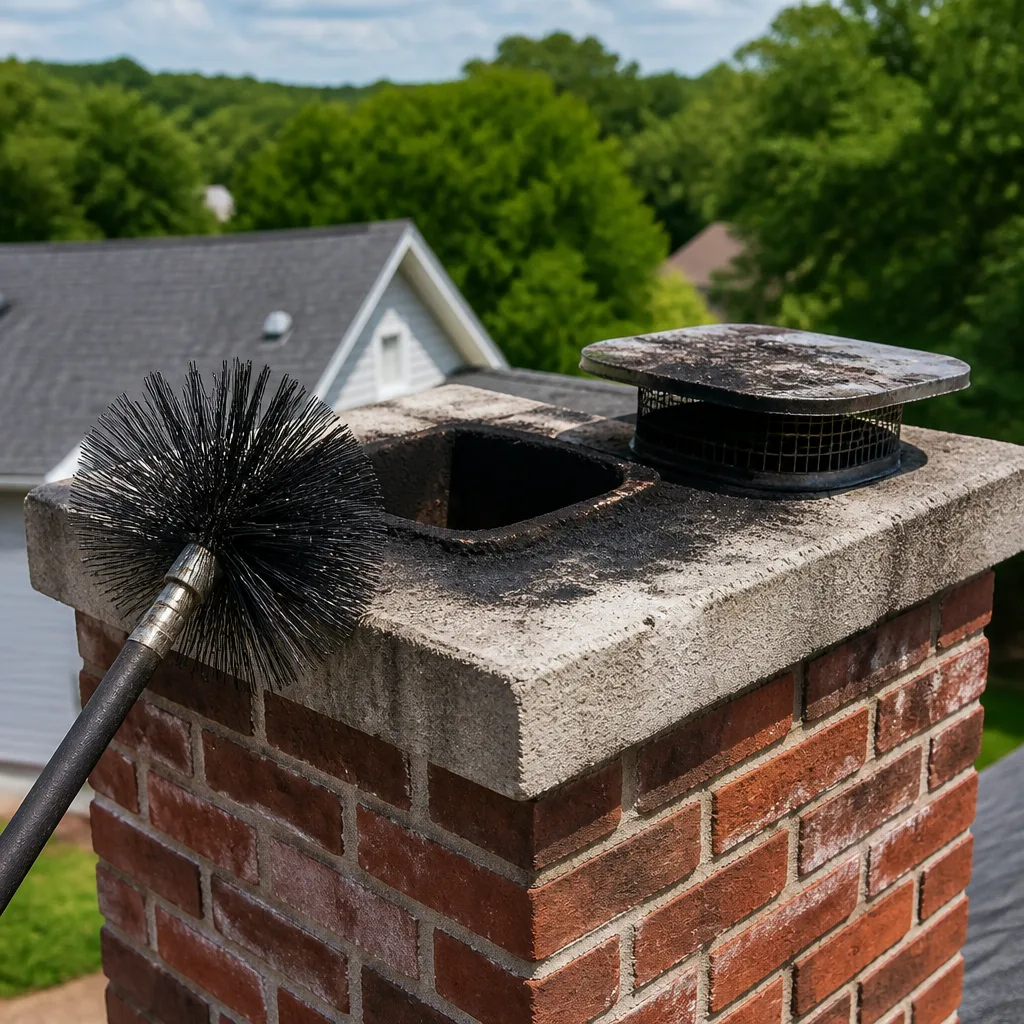
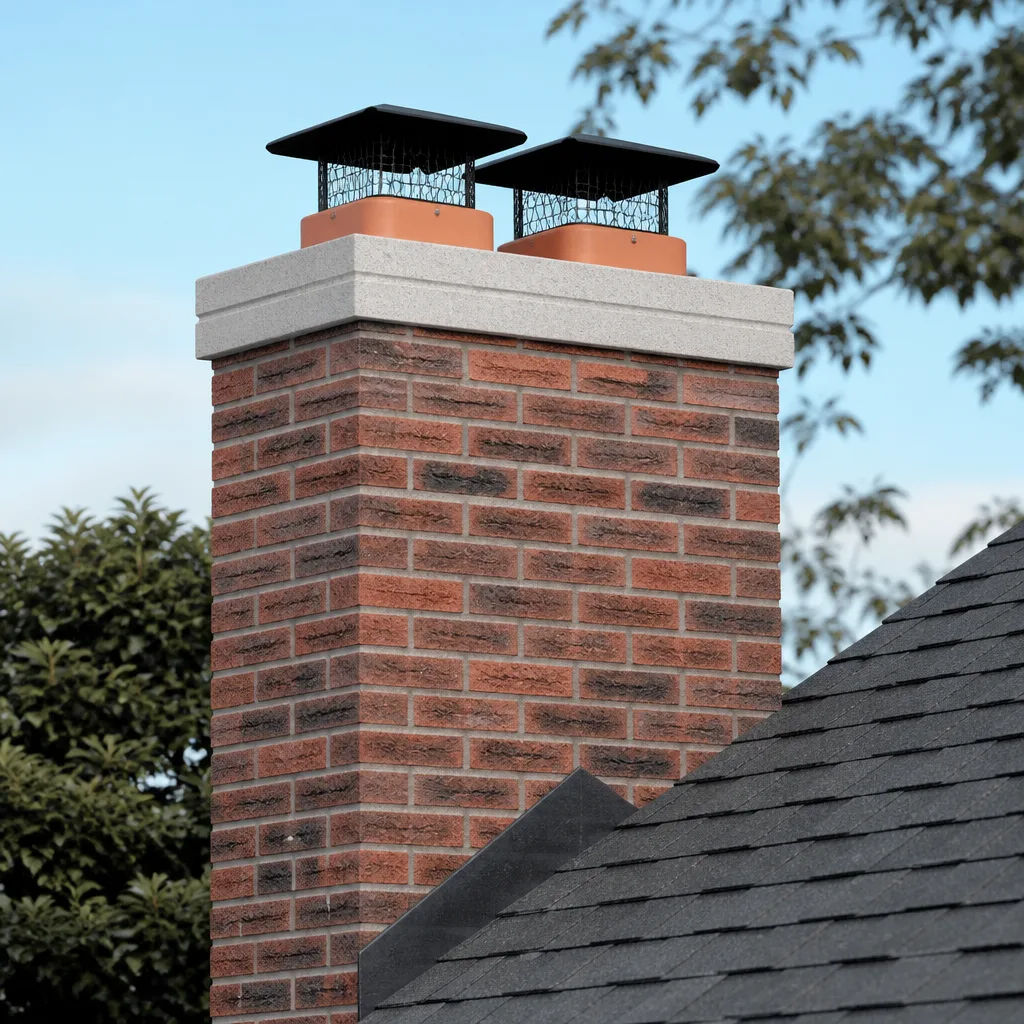
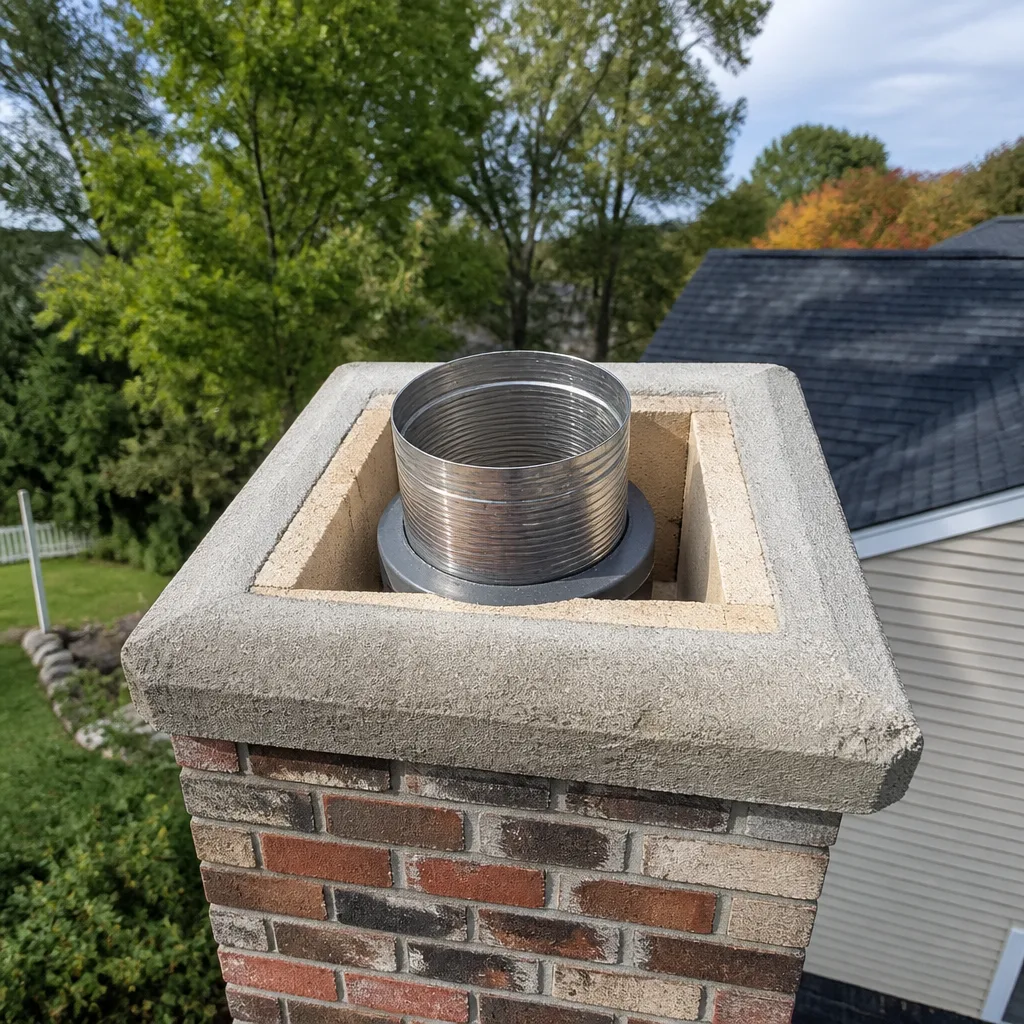
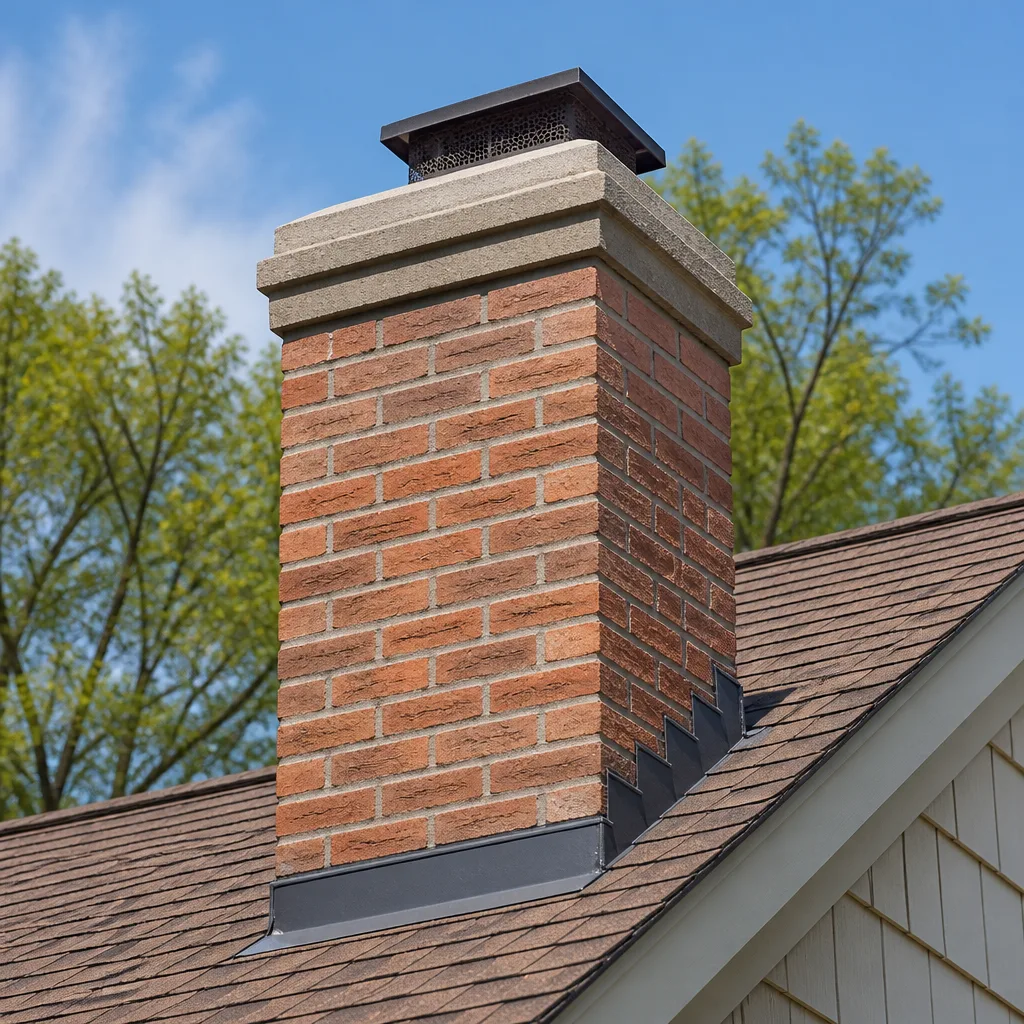
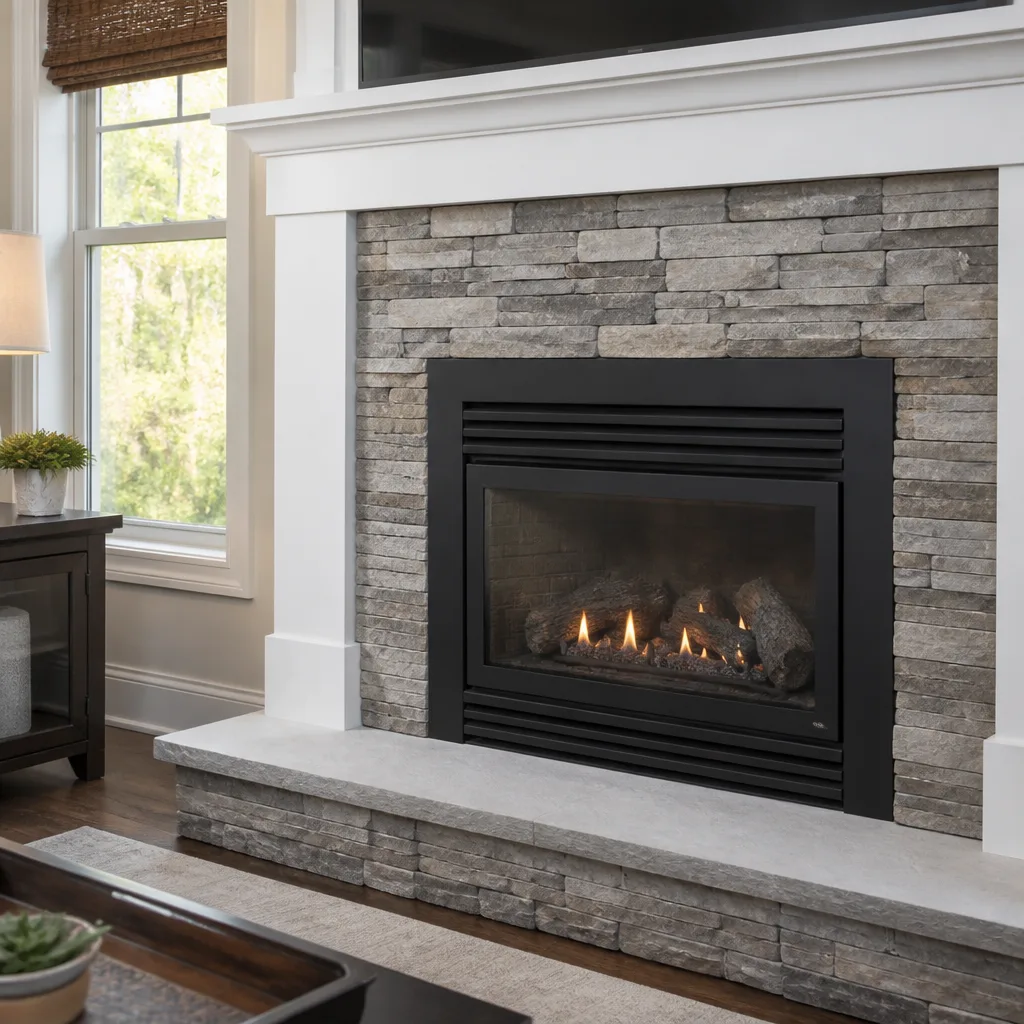
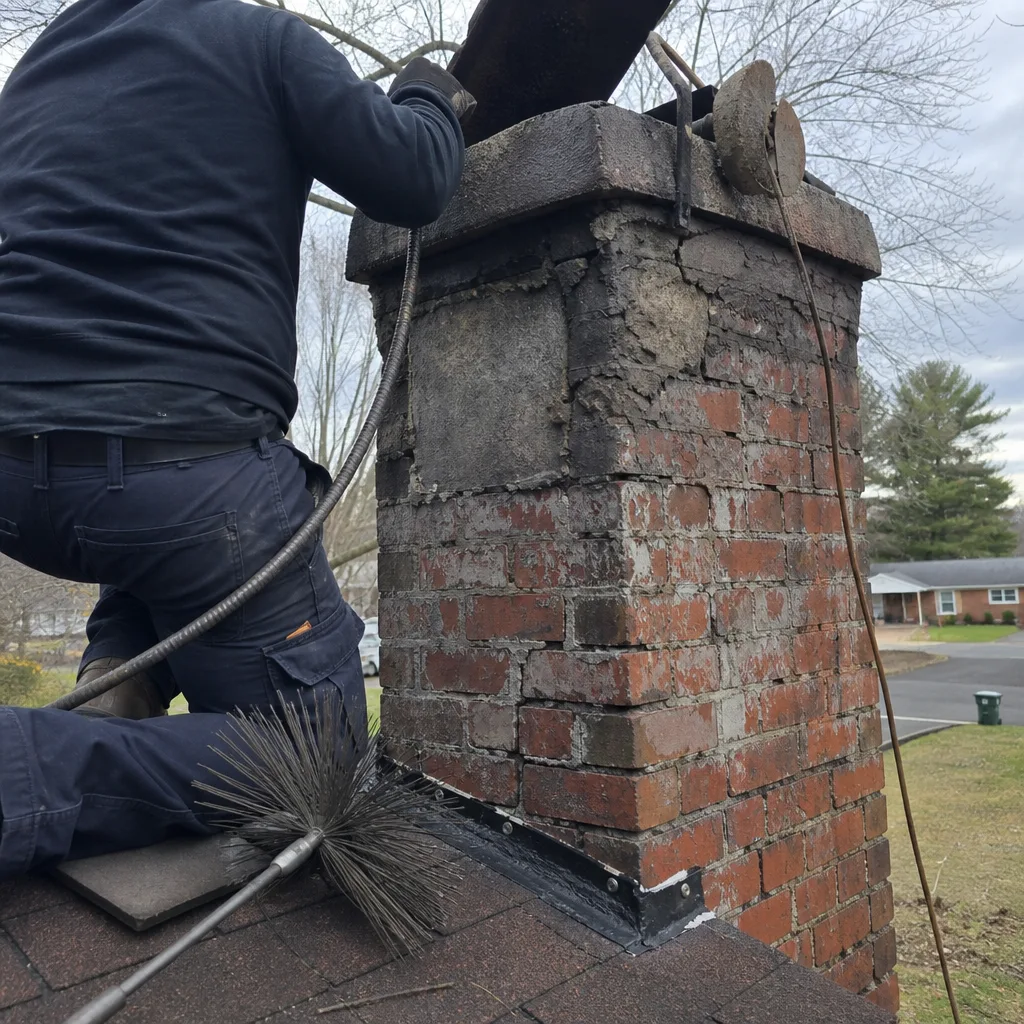 Before
 After
After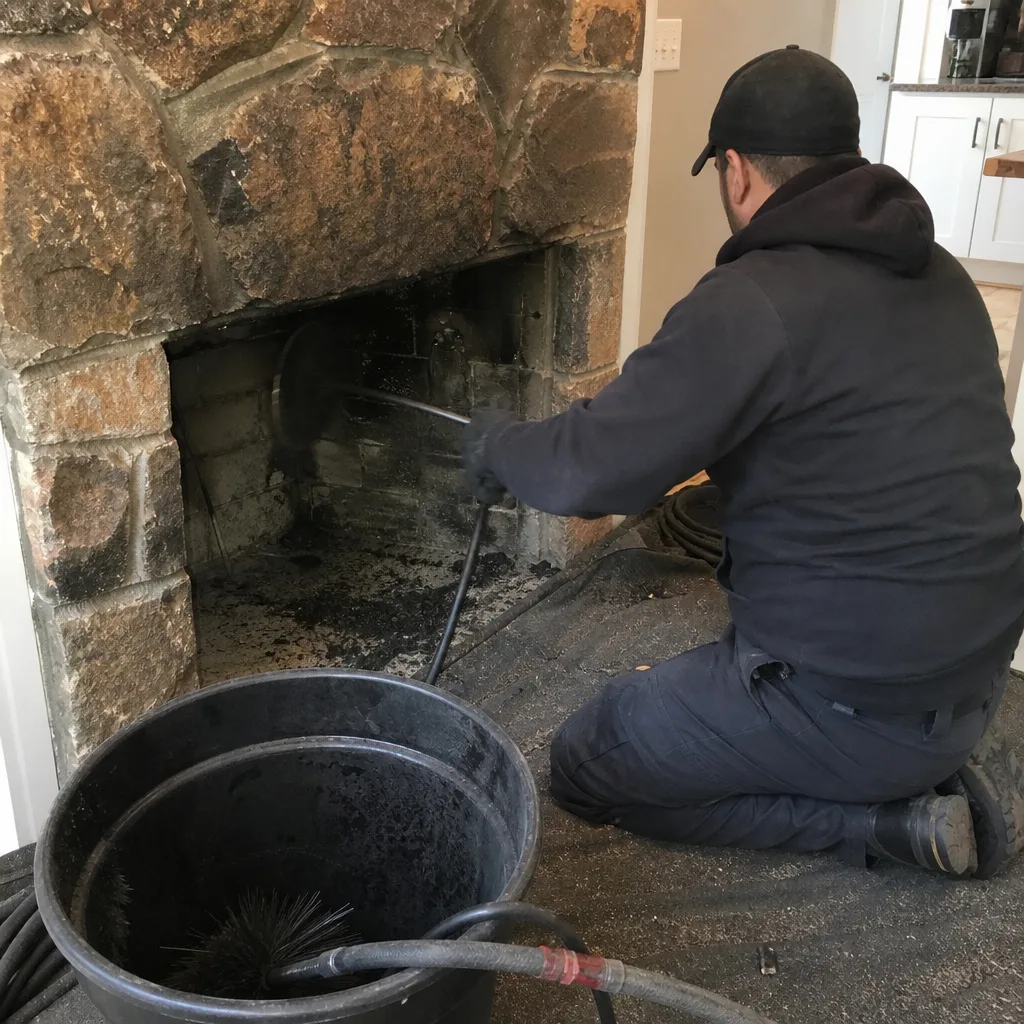 Before
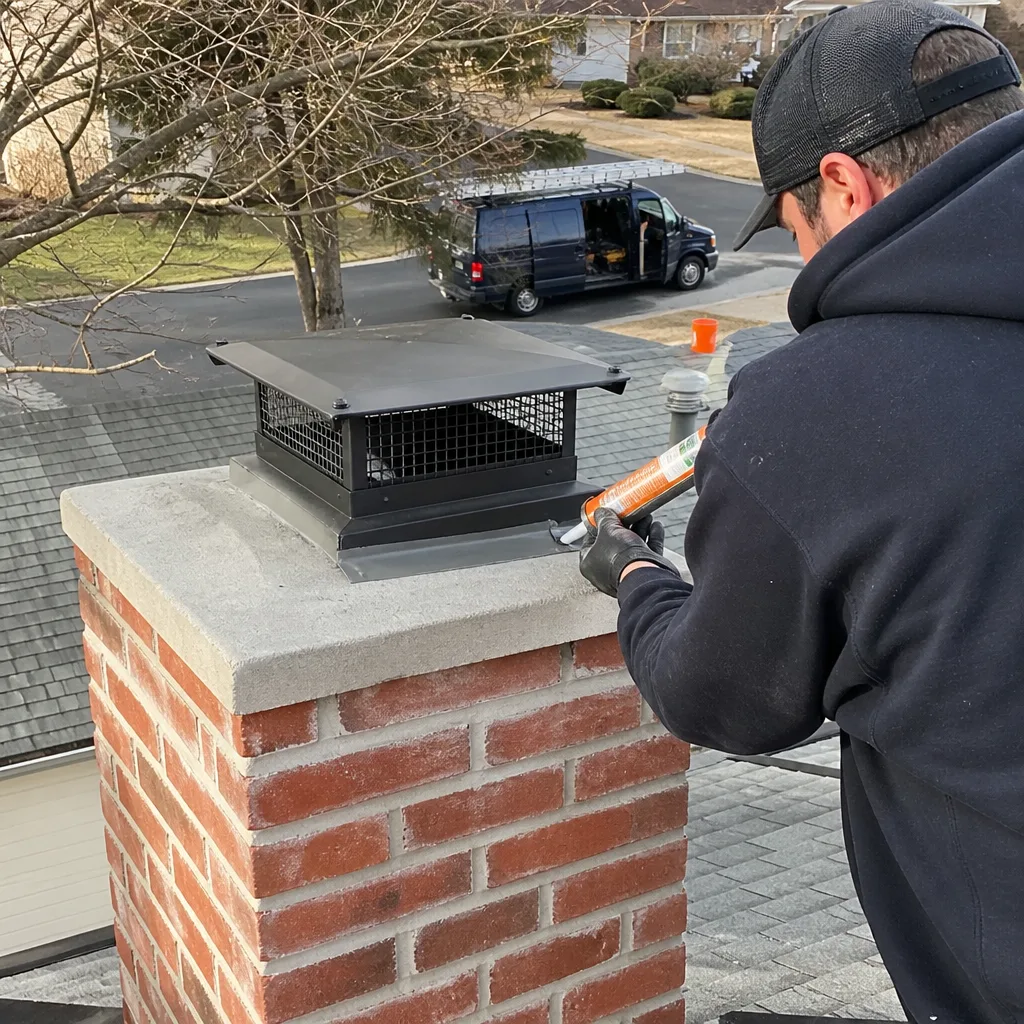 After
After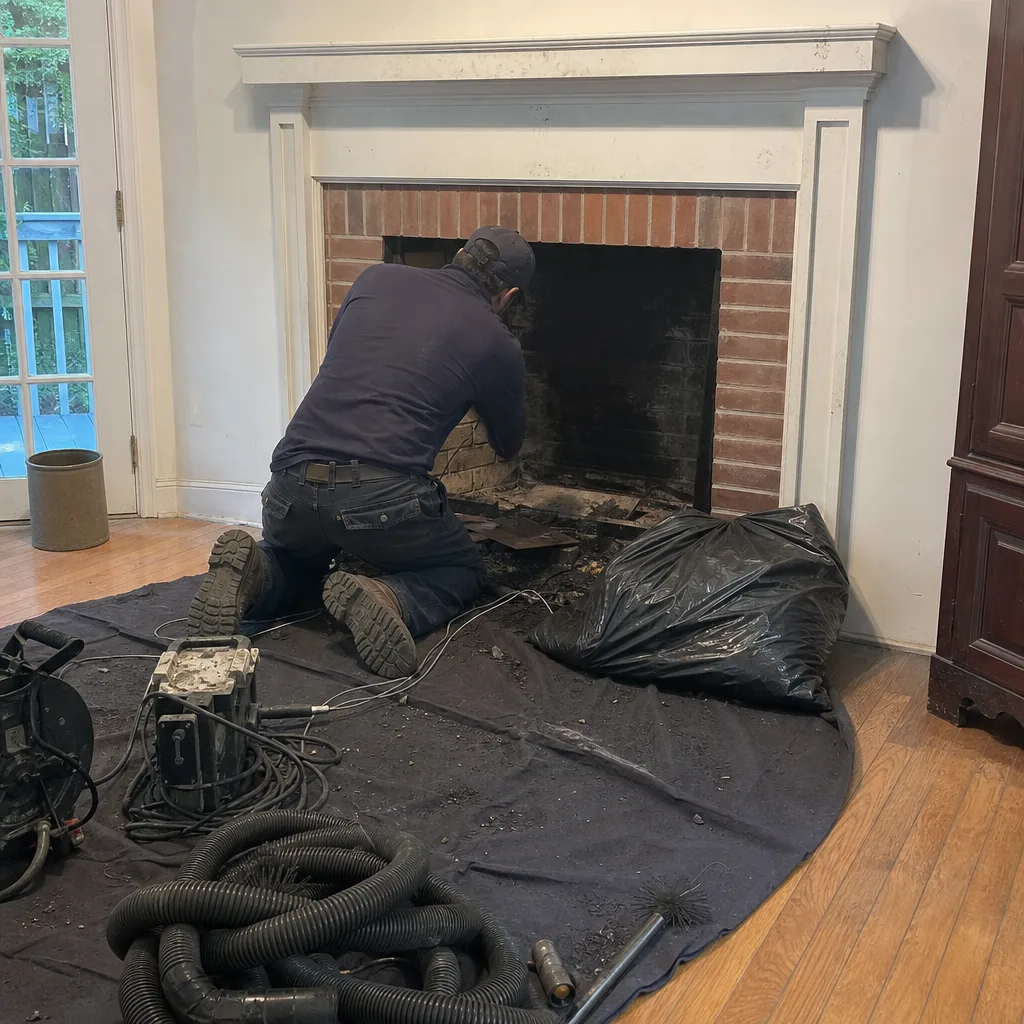 Before
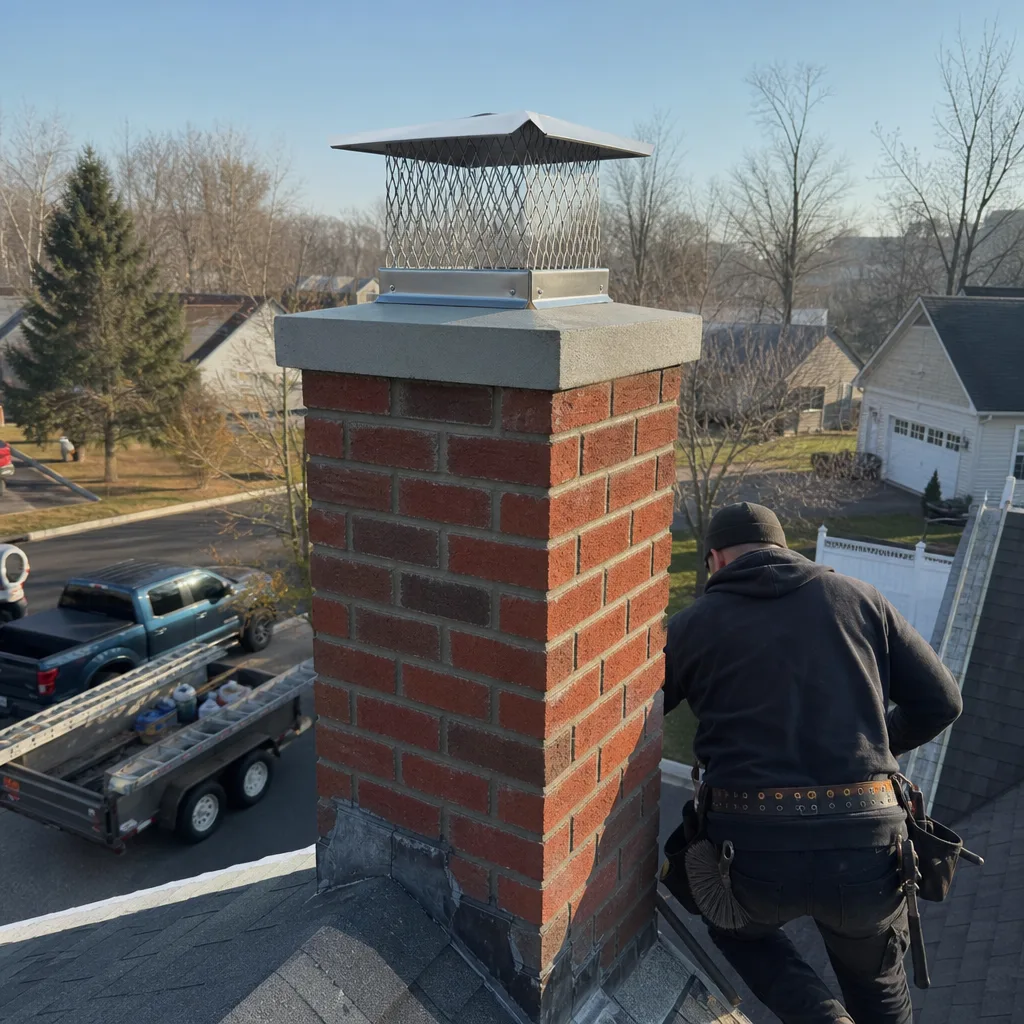 After
AfterThe Complete Guide to Chimney Cleaning in Bridgewater
The CSIA estimates that 25% of house fires involve chimneys, but in a climate like Bridgewater’s, where temperatures swing 90 degrees between July and January, the failure mode is almost never “forgot to clean it.” It’s “cleaned it on the wrong schedule for the wrong reasons.” Most homeowners treat chimney sweeping as a single annual chore, yet the clay-lined flues, hard freeze-thaw cycles, and mixed fuel types common in Somerset County create a maintenance picture that changes by liner condition, wood species, and burn volume, not by calendar date alone. This guide maps that picture honestly, so you know exactly what you’re paying for and why.
Quick Answer
Chimney cleaning in Bridgewater, New Jersey, typically costs between $200 and $350 for a standard sweep with Level 1 inspection, and should be performed annually for wood-burning systems, every two to three years for gas, and after every two tons of pellets. Because Somerset County’s freeze-thaw cycle accelerates mortar and liner damage, a photo-documented Level 2 inspection is the only way to know whether your flue is actually sound beneath the soot.
Table of Contents
- How Bridgewater’s Climate Changes What “Clean” Means
- The Fuel-Type Matrix: Wood, Gas, and Pellets Leave Different Signatures
- Level 1, 2, or 3: Which NFPA 211 Inspection Do You Actually Need?
- What a Photo-Documented Inspection Shows That a Flashlight Cannot
- How to Read a Sweep’s Written Report Without Getting Sold
- What Chimney Cleaning Costs in Bridgewater (and What Drives the Price)
- Setting Your Real Cleaning Schedule: Cords, Not Calendars
- Common Mistakes to Avoid
- When to Call a Professional
- Frequently Asked Questions
How Bridgewater’s Climate Changes What “Clean” Means
Bridgewater sits in the Raritan Valley where winter lows regularly hit single digits and summer humidity pushes 80%. That 90-degree annual temperature swing does more than make you switch the thermostat. It creates a freeze-thaw cycle inside your chimney that homeowners in milder climates simply do not face.
Here’s what happens. Moisture seeps into hairline cracks in your flue liner or mortar joints during warm, humid months. When January drops to 8 degrees, that water freezes and expands by about 9%. The pressure spalls off surface mortar and widens cracks. Come spring, more water enters the larger openings. Repeat this cycle across 20 or 30 winters, and a flue that looked “fine” during a casual flashlight peek is now shedding pieces into the smoke chamber.
In our experience across Somerset County, from the older colonials near the historic district to the 1970s splits off Foothill Road, this pattern shows up differently depending on construction era:
- Pre-1960 chimneys: Often unlined or lined with vitrified clay that has already survived 60+ freeze-thaw cycles. The clay is brittle. Spalling at the flue joints is common, and cleaning frequency matters less than inspection thoroughness.
- 1960-1990 construction: Clay tile liners in their middle age. These are the chimneys where we find the most “surprise” damage because they look intact from the top but have shifted at the shoulders or developed stair-step cracks.
- Post-1990 systems: More likely to have stainless steel or properly insulated liners, but also more likely to have factory-built metal chimneys that corrode at the collar where they exit the roofline.
The practical implication: a “clean” chimney in Bridgewater is not merely one with creosote removed. It is one whose liner and mortar have been visually verified intact after accounting for decades of thermal stress. This is why we document every chimney cleaning and sweep in Bridgewater with photos the homeowner can see, not a verbal thumbs-up.
The Fuel-Type Matrix: Wood, Gas, and Pellets Leave Different Signatures
Not all “cleaning” addresses the same problem. The residue left by a cord of seasoned red oak bears no resemblance to the corrosion pattern of a vented gas log set, and both differ from the fly ash and clinkers produced by a pellet stove. Your fuel type should dictate both inspection criteria and cleaning frequency.
Wood-Burning Systems
A cord of properly seasoned hardwood, burned hot and dry, produces roughly 1 to 2 gallons of flammable creosote per burning season in a typical Bridgewater fireplace. Green or softwood can triple that. The creosote forms in three stages:
- Stage 1 (soot): Fine, dusty, easily brushed. Normal accumulation.
- Stage 2 (granular): Crunchy, porous flakes. Indicates cooler fires or restricted airflow. Requires more aggressive brushing.
- Stage 3 (glazed): Shiny, tar-like, and highly flammable. Forms when flue gases condense below 250°F. Cannot be removed with standard brushes; requires chemical treatment or rotary cleaning. In Bridgewater, we see this most often in chimneys on north-facing walls where the flue stays cold, or in inserts installed into oversized fireplaces without proper liners.
The species matters. Oak and hickory, common in New Jersey cordwood markets, burn hot and clean when seasoned 18+ months. Pine and spruce, sometimes sold cheap at roadside stands near Route 22, spike creosote accumulation even when dry. We have pulled 3/4-inch glazed deposits from chimneys in the Finderne section where the homeowner “only burned a little pine to get the fire started.”
Gas-Burning Systems
Gas produces no creosote, but it produces water vapor and acidic condensate. In a clay flue, that condensate attacks mortar. In a metal flue, it causes corrosion at the joints. The danger is not chimney fire; it is liner failure allowing carbon monoxide into the structure.
Gas systems in Bridgewater need inspection every two to three years, with attention to:
- Corrosion at the draft hood and flue collar
- Spalling or flaking in clay liners exposed to acidic condensate
- Proper draft under all weather conditions, especially during high-wind events common to the Raritan Valley
Pellet Stoves and Inserts
Pellets burn very efficiently but produce fly ash that accumulates in the venting system, not the chimney itself. The critical maintenance is cleaning the exhaust vent, the combustion blower, and the ash traps, typically after every two tons of pellets. The chimney connection still needs annual visual inspection, but full sweeping is often unnecessary unless the installation shares a flue with another appliance.
Our technicians carry professional-grade materials from DuraFlex and Olympia Chimney specifically because pellet venting and wood-burning flues demand different liner specifications. Using the wrong material, or a generic substitute, voids manufacturer warranties and creates liability.
Level 1, 2, or 3: Which NFPA 211 Inspection Do You Actually Need?
The National Fire Protection Association defines three inspection levels, and most homeowners do not know which they are receiving or why. The distinction matters for both safety and cost.
Level 1 Inspection
This is a visual examination of readily accessible portions of the chimney exterior, interior, and appliance and chimney connection. No tools are used to open or remove components. A Level 1 is appropriate when:
- The appliance or venting system is not being changed
- You are continuing to use the same fuel type
- No malfunction, fire, or external event (earthquake, lightning strike, chimney fire) has occurred
- The chimney has been regularly maintained and you have no reason to suspect hidden damage
In Bridgewater, a Level 1 paired with standard sweeping satisfies most annual maintenance needs for gas systems and well-maintained wood burners.
Level 2 Inspection
This includes everything in Level 1 plus examination of accessible attics, crawl spaces, and basements, and a video scan of the interior flue surfaces. Level 2 is required when:
- Any change is made to the appliance or fuel type
- A chimney fire, building fire, or external event has occurred
- The property is being sold or transferred
- Malfunction or damage is suspected
This is where our chimney repair in Bridgewater work most often begins. The camera reveals what no flashlight can: shifted flue tiles at the shoulder, thin cracks that will become spalls after the next freeze-thaw cycle, and creosote buildup behind obstructions. We use HeatShield-compatible camera systems that allow us to document liner conditions with the precision needed for repair planning.
Level 3 Inspection
This involves demolition of permanently attached portions of the chimney or building to gain access to concealed areas. Level 3 is only triggered when a Level 1 or 2 inspection reveals a hazard that cannot be fully evaluated without removal of components. It is rare, and we discuss it with the homeowner before any destructive work begins.
The honest truth: many sweeps in the Bridgewater market sell Level 1 inspections but call them “complete.” Others push Level 2 on every customer because the camera justifies a higher price. Our approach is to explain what each level covers, why your situation does or does not require it, and let you decide. No surprises on the bill.
What a Photo-Documented Inspection Shows That a Flashlight Cannot
A flashlight inspection from the top of the flue or through the damper is better than nothing. It is also fundamentally limited. The human eye cannot focus on surfaces 15 feet away in a dark, soot-coated tube. It cannot see around the shoulder where the flue narrows. It cannot detect hairline cracks that are vertical and therefore invisible from above.
A proper camera inspection, which we perform during every Level 2 service, captures:
- The full circumference of every flue tile joint. We look for gaps, shifted tiles, and missing mortar. In Bridgewater’s climate, a 1/8-inch gap at a joint can admit enough moisture to cause spalling within two seasons.
- The smoke chamber above the firebox. This is the area where most chimney fires begin, and it is completely invisible from below without a camera angled upward.
- The flue liner surface condition. We document glazed creosote, spalled clay, corrosion patterns on metal liners, and any evidence of previous chimney fire damage (thermal cracking, warped metal, discolored mortar).
- Obstructions and animal entry. Squirrel nests, collapsed liner sections, and broken dampers all show clearly on camera. We have found raccoon latrines in chimneys off Chimney Rock Road that the homeowner had no idea existed.
The photos go to you, not just to us. You see what we see. The plain-English verdict tells you what requires immediate action, what should be monitored, and what is simply normal wear. This documentation becomes part of your home’s maintenance record, useful for insurance claims, real estate transactions, and your own peace of mind.
Photos you can see, a plain-English verdict. That is the standard we have held for over 42 years.
How to Read a Sweep’s Written Report Without Getting Sold
The written report is where many homeowners lose confidence. A page of technical terminology, urgent-sounding recommendations, and no clear prioritization feels like a sales pitch, not a service call. Here is how to read any report, including ours, with a critical eye.
Look for These Elements
- Photo documentation with annotations. Every significant finding should have a corresponding image. Vague descriptions without visuals warrant skepticism.
- Clear condition ratings. We use a straightforward system: Satisfactory, Monitor, Repair Recommended, or Urgent. No amber-yellow-green traffic light nonsense that obscures meaning.
- Specific measurements. “Crack in flue tile” is useless. “Hairline crack, 3 inches, vertical, at third flue joint from top” is actionable.
- Code or standard references. Recommendations should cite NFPA 211, local building code, or manufacturer specifications, not generic “safety concerns.”
- Prioritized action items with consequences. “Repair recommended before next burning season” differs meaningfully from “Urgent: do not use until repaired.”
Red Flags in Any Report
- Recommendations for liner replacement without photo evidence of liner failure
- “Dangerous” or “hazardous” used without specific code violation cited
- Pressure to decide immediately, especially for expensive work
- No mention of what can safely wait
- Estimate provided verbally only, with nothing in writing
Our reports include all findings, prioritized, with photos and written estimates. If something can wait a season, we say so plainly. If it cannot, we explain exactly why. The 90-Day Done Right Promise covers our work, not our sales pitch. In writing, no arguing.
What Chimney Cleaning Costs in Bridgewater (and What Drives the Price)
Price transparency matters to homeowners who have been burned by contractors before. Here is what chimney cleaning actually costs in the Bridgewater market, with the variables that move the number.
| Service | Typical Range in Bridgewater | What Affects the Price |
|---|---|---|
| Standard sweep with Level 1 inspection | $200 - $350 | Number of flues, accessibility (steep roof, height), amount of creosote |
| Level 2 inspection with camera | $300 - $500 | Number of appliances, length of flue, need for attic/crawl access |
| Glazed creosote removal (chemical + rotary) | $400 - $700 | Thickness of deposit, number of treatments needed, flue diameter |
| Fireplace insert removal and reinstallation for access | $150 - $300 additional | Weight of insert, condition of surround, need for new gaskets |
| Chimney cap or damper cleaning/service | $75 - $200 additional | Type of cap, corrosion level, need for minor hardware replacement |
Factors that increase cost in Bridgewater specifically:
- Height and access. Two-story colonials with steep pitches are common in neighborhoods like Martinsville and the area around Washington Valley Park. We bring proper ladders and rigging; some competitors add surcharges for “difficult access” they did not disclose upfront. Our pricing is flat and agreed before booking.
- Multiple flues. Many Bridgewater homes have separate flues for basement and main-floor fireplaces, or for fireplace and furnace. Each requires independent inspection and cleaning.
- Neglected maintenance. A chimney not swept in five years may require chemical treatment for glazed creosote, or may reveal damage that makes simple sweeping insufficient.
Our standing offers include $50 off any repair over $250, a free second opinion on any written estimate, an $89 seasonal tune-up, and a permanent 5% senior and veteran discount. No-hassle upfront pricing means the number on the estimate is the number on the invoice.
Setting Your Real Cleaning Schedule: Cords, Not Calendars
The “sweep every year on September 1st” approach works for some households and wastes money for others. A more precise method ties maintenance to actual use.
For Wood-Burning Fireplaces and Stoves
- Track your cords. One cord of seasoned hardwood, burned as primary heat, typically requires annual sweeping. If you burn half a cord for ambiance, you can likely extend to 18-24 months, provided you perform a mid-season visual check of the firebox and damper.
- Monitor your fires. Smoky fires, difficulty starting, or smoke entering the room indicate draft problems or partial obstruction. Do not wait for the scheduled sweep.
- Inspect after weather events. The windstorms that sweep through Somerset County, particularly in late winter and early spring, can damage caps and allow debris entry. A visual check from ground level after major storms is prudent.
- Schedule before burning season. In Bridgewater, that means September or October, when our schedule still has flexibility. November and December bookings often run two to three weeks out.
For Gas Systems
Every two to three years for inspection, with immediate attention to any odor, sooting around the appliance, or moisture staining on walls near the chimney. The corrosion risk from acidic condensate is real but slow-moving.
For Pellet Systems
Clean the vent system after every two tons of pellets, typically annually for primary heat users. The chimney connection needs visual inspection at the same interval.
Homes in the Bradley Gardens section, where many properties date to the 1960s and 1970s, often have mixed systems: a wood-burning fireplace converted to gas logs, with a pellet stove in the basement for supplemental heat. Each appliance has its own venting requirements, and none should be assumed to share the maintenance schedule of another.
Common Mistakes to Avoid
- Assuming gas means “maintenance-free.” Gas systems do not produce creosote, but they do produce corrosive condensate and require draft verification. We have replaced corroded metal liners in gas-only chimneys where the homeowner assumed annual inspection was unnecessary.
- Burning unseasoned wood to “save money.” Green wood costs less per cord but produces up to three times the creosote. In Bridgewater’s tight housing stock, where many chimneys serve multiple appliances, the savings evaporate with one glazed creosote removal service.
- Hiring based on the lowest quote without verifying inspection level. A $149 “complete chimney service” that includes only a flashlight peek from the top is not comparable to a documented Level 2 inspection. Ask specifically what NFPA 211 level is included.
- Ignoring the smell of creosote in summer. That sharp, tarry odor during humid July days means creosote is off-gassing. It is also a sign of significant accumulation that will be harder to remove if left through another season.
- DIY cleaning without understanding liner condition. Brushing a flue with damaged liner tiles can dislodge spalled material and create obstructions. The physical act of sweeping is straightforward; knowing when the flue can withstand it requires training.
- Neglecting the chimney cap. A missing or damaged cap admits rain, animals, and debris. In Bridgewater’s wooded areas, particularly near the Sourland Mountain preserve influence, squirrel and raccoon entry is common. The cap is your first line of defense.
- Waiting for visible smoke problems. By the time smoke backs up into the room, you have a partial obstruction, draft failure, or liner damage. These conditions develop gradually and are detected during proper inspection, not suddenly.
When to Call a Professional
Call for service when you notice any of the following: smoke entering the room during normal operation, a persistent sharp or tarry odor from the fireplace, visible creosote flakes in the firebox, white or orange staining on exterior masonry, a damaged or missing chimney cap, or any changes in draft performance after a weather event. If you have not had documented inspection in two or more years, schedule regardless of apparent condition.
For fireplace services in Bridgewater that include full inspection, cleaning, and repair, Hearthstone Chimney Co. offers free estimates. Our phones are answered by a live person 24 hours a day, 7 days a week, not a voicemail or callback queue. Background-checked, uniformed technicians complete most jobs in a single visit, and our no-hassle upfront pricing means no surprises on the bill. Call (908) 589-8342 to schedule.
Frequently Asked Questions
A standard chimney sweep with Level 1 inspection in Bridgewater typically costs between $200 and $350, while a Level 2 inspection with camera documentation runs $300 to $500. Factors that increase price include multiple flues, steep roof access, glazed creosote requiring chemical treatment, and fireplace insert removal. Call (908) 589-8342 for an exact quote - estimates are free.
Wood-burning systems should be swept after every cord of seasoned hardwood burned, or annually for primary heat users. Gas systems need inspection every two to three years. Pellet systems require vent cleaning after every two tons of pellets. Bridgewater’s freeze-thaw cycle means liner condition should be verified with camera inspection at least every three to five years regardless of fuel type. Call (908) 589-8342 to discuss your specific usage.
You need a new liner only if your existing liner is damaged, improperly sized, or absent, and only if that condition is documented with photos you can see. Common triggers in Bridgewater include spalled or shifted clay tiles, corrosion in metal liners, or installation of a new appliance with different venting requirements. We do not recommend liner replacement without camera evidence, and we will tell you plainly when damage can be monitored rather than repaired immediately. Call (908) 589-8342 for a free second opinion on any liner recommendation.
For wood burners, creosote accumulates and increases chimney fire risk, while hidden liner damage from freeze-thaw cycles progresses unchecked. For gas systems, acidic condensate corrodes liners and can allow carbon monoxide into living spaces. For all systems, obstructions from animal entry or debris can restrict draft and cause smoke or CO backup. The cost of deferred maintenance typically exceeds the cost of regular service, sometimes dramatically. Call (908) 589-8342 to schedule before problems develop.
A chimney sweep removes combustible deposits and obstructions from the flue and firebox. A chimney inspection evaluates the structural condition, liner integrity, and proper clearances without necessarily cleaning. In practice, they are often performed together, but the distinction matters for pricing and for understanding what you are paying for. A sweep without inspection addresses only one risk; an inspection without sweep may be appropriate for gas systems with no apparent accumulation.
You can remove light soot from a properly lined, easily accessible flue with appropriate brushes and rods. You should not attempt this if your chimney has not been professionally inspected within the past two years, if you suspect liner damage, if the flue is unusually tall or steeply pitched, or if you find glazed creosote. The physical risk of falling from a Bridgewater roof, particularly on two-story colonials with steep pitches, is significant. For most homeowners, professional service is the safer and more thorough choice. Call (908) 589-8342 to discuss what your specific chimney requires.
The Bottom Line
Chimney cleaning in Bridgewater is not a single annual ritual but a maintenance decision shaped by your fuel type, burn volume, liner condition, and the specific stresses of Somerset County’s climate. The freeze-thaw cycle that spalls mortar, the creosote signatures of different wood species, and the corrosion patterns of gas condensate all demand informed attention, not calendar-based habit. A photo-documented inspection separates necessary repair from unnecessary upsell, and a written report with prioritized findings lets you budget and plan. Done right, chimney maintenance protects your home without surprising you. Done poorly or blindly, it leaves risks hidden and costs uncontrolled. We have been serving this area for over 42 years, and we plan to be here when your chimney needs attention again. A square deal, no surprises on the bill, and work we stand behind. That is the Keystone Standard.
Written by Russell Haines, Owner at Hearthstone Chimney Co., serving Bridgewater since 2014.