
Last updated September 10, 2026
Level 1 sweep and inspection to the NFPA 211 annual standard - flue, crown, cap, and flashing checked and photographed
Chimney sweep logs do not sweep chimneys. They loosen some creosote - which then falls where a brush and vacuum still have to collect it.
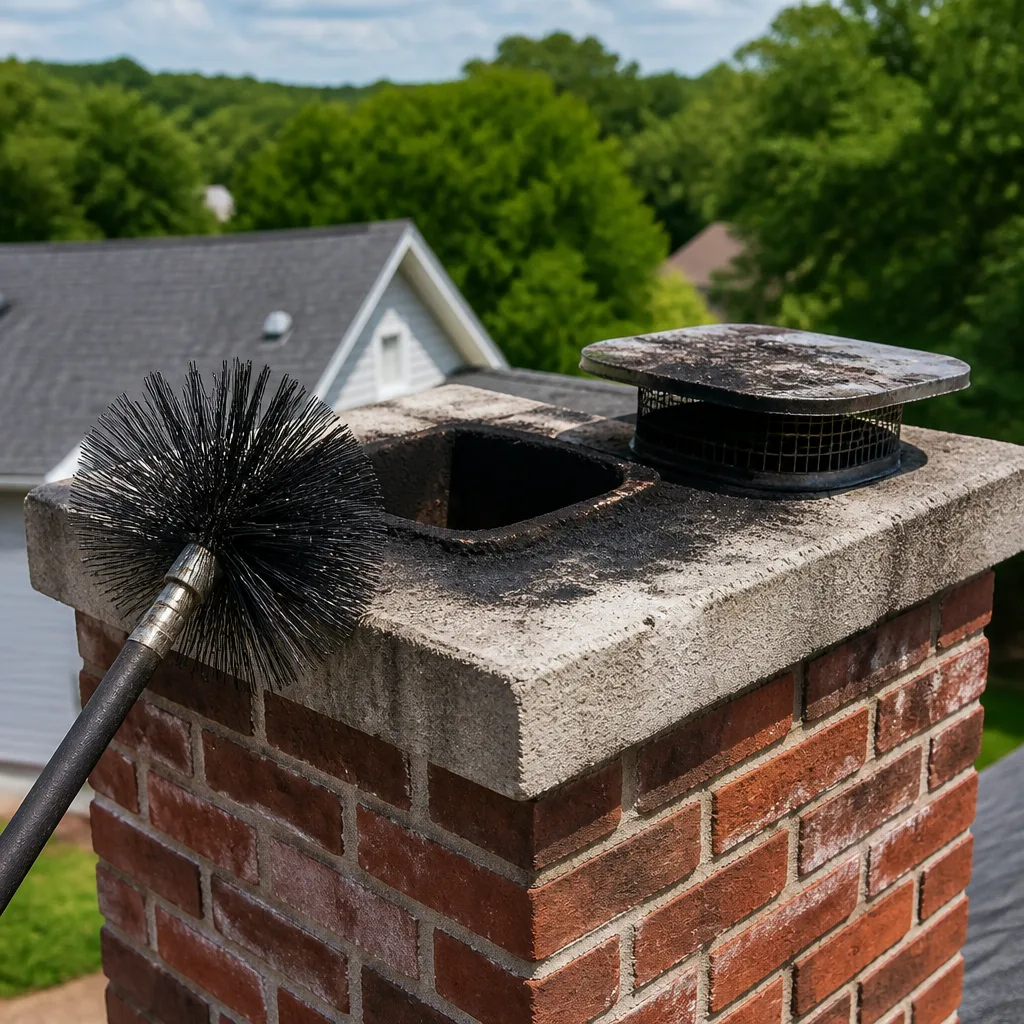
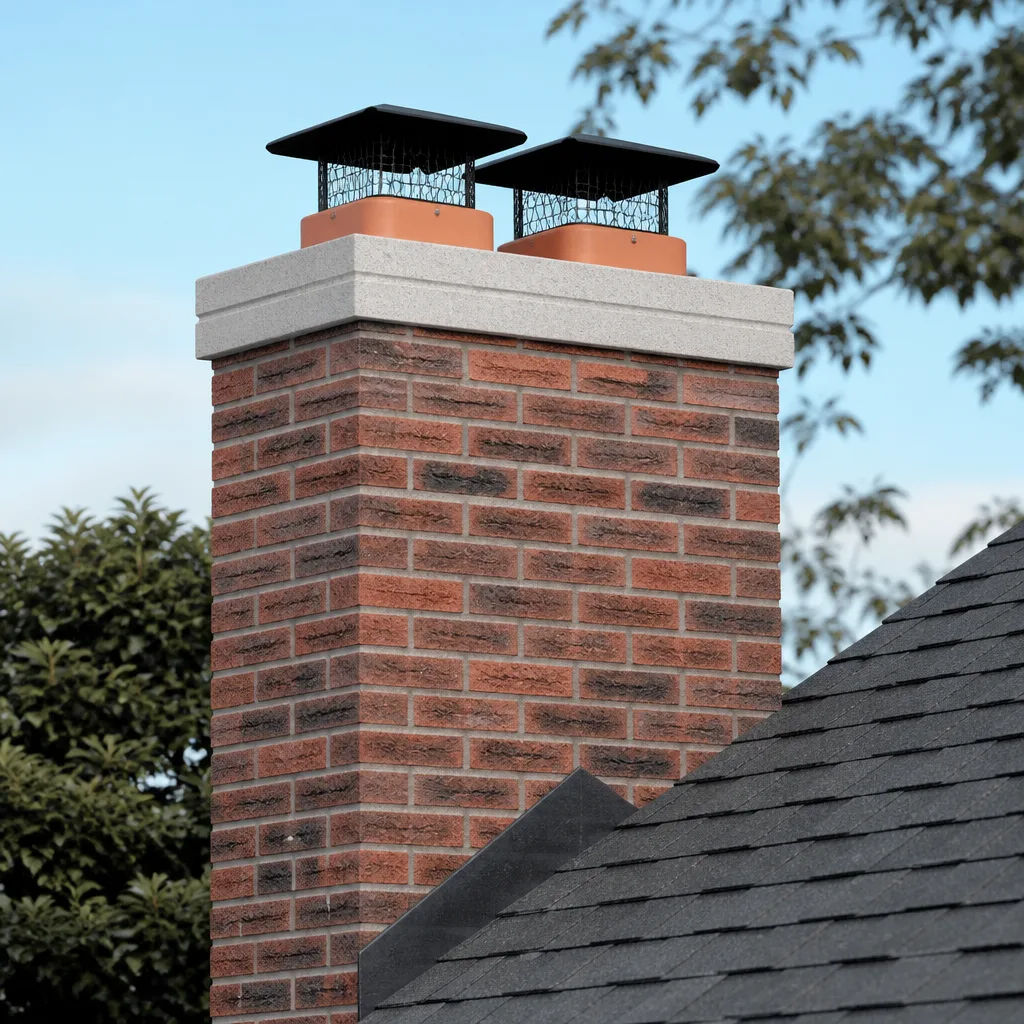
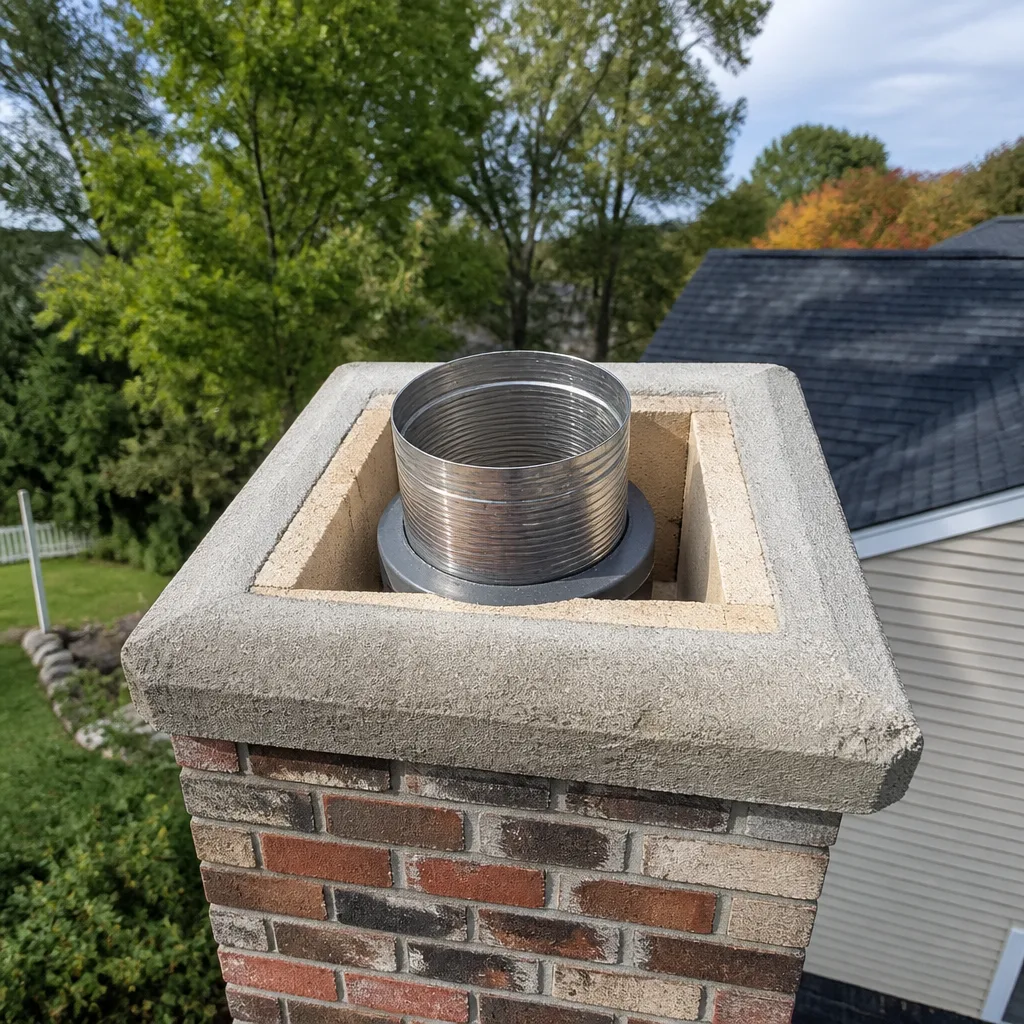
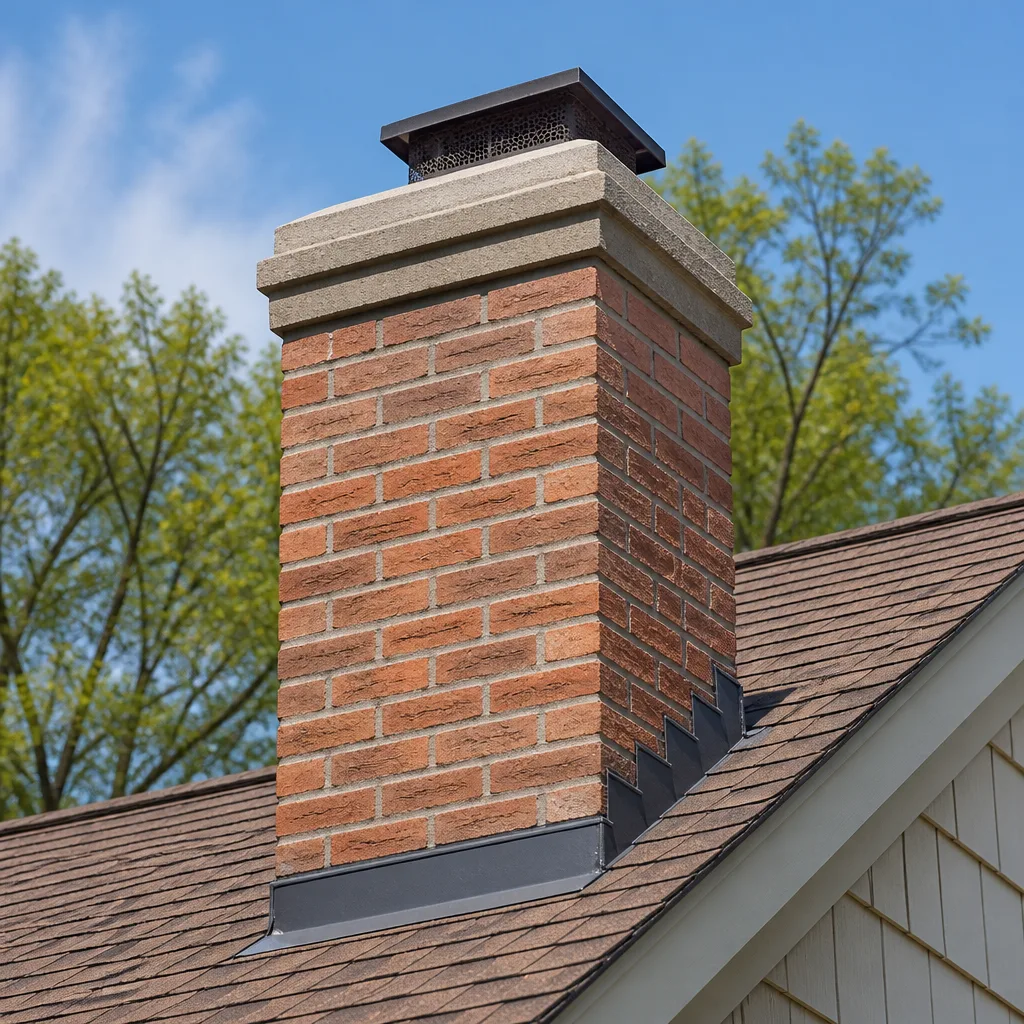
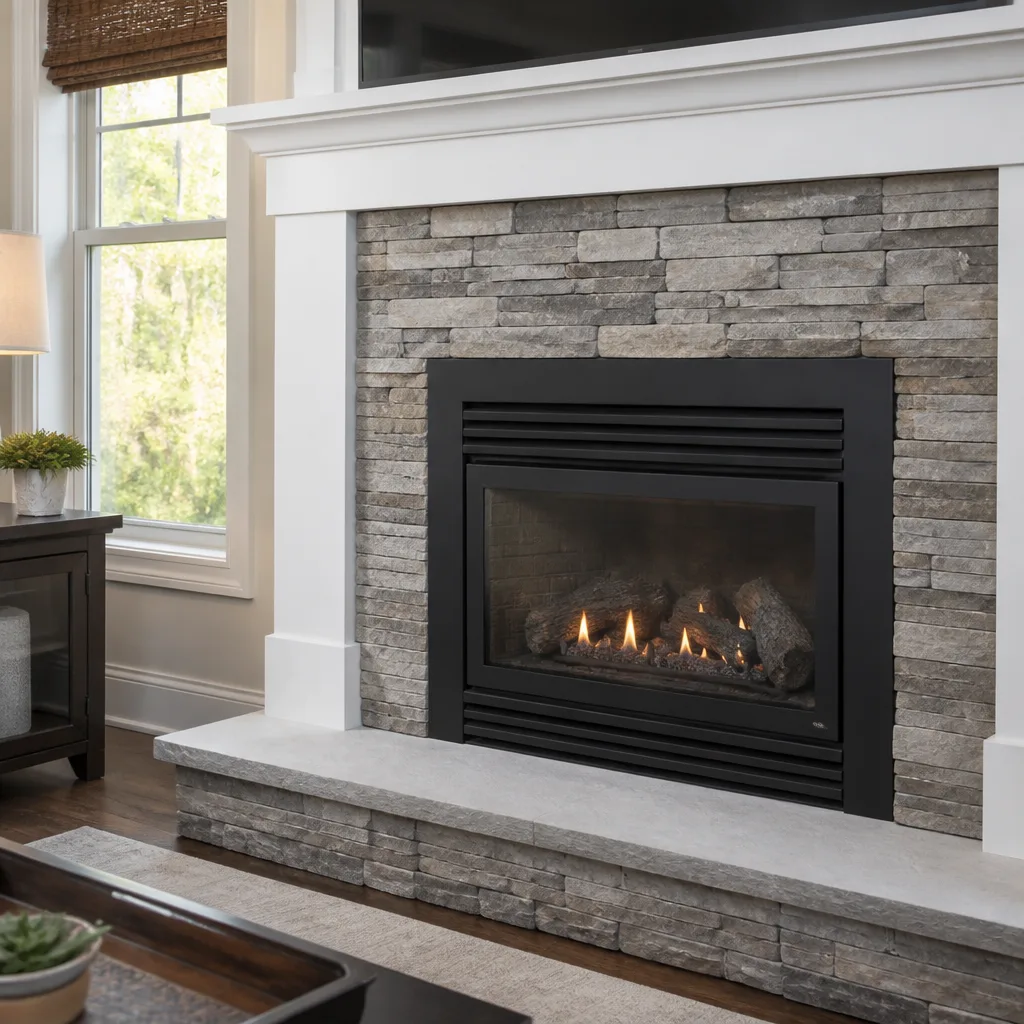
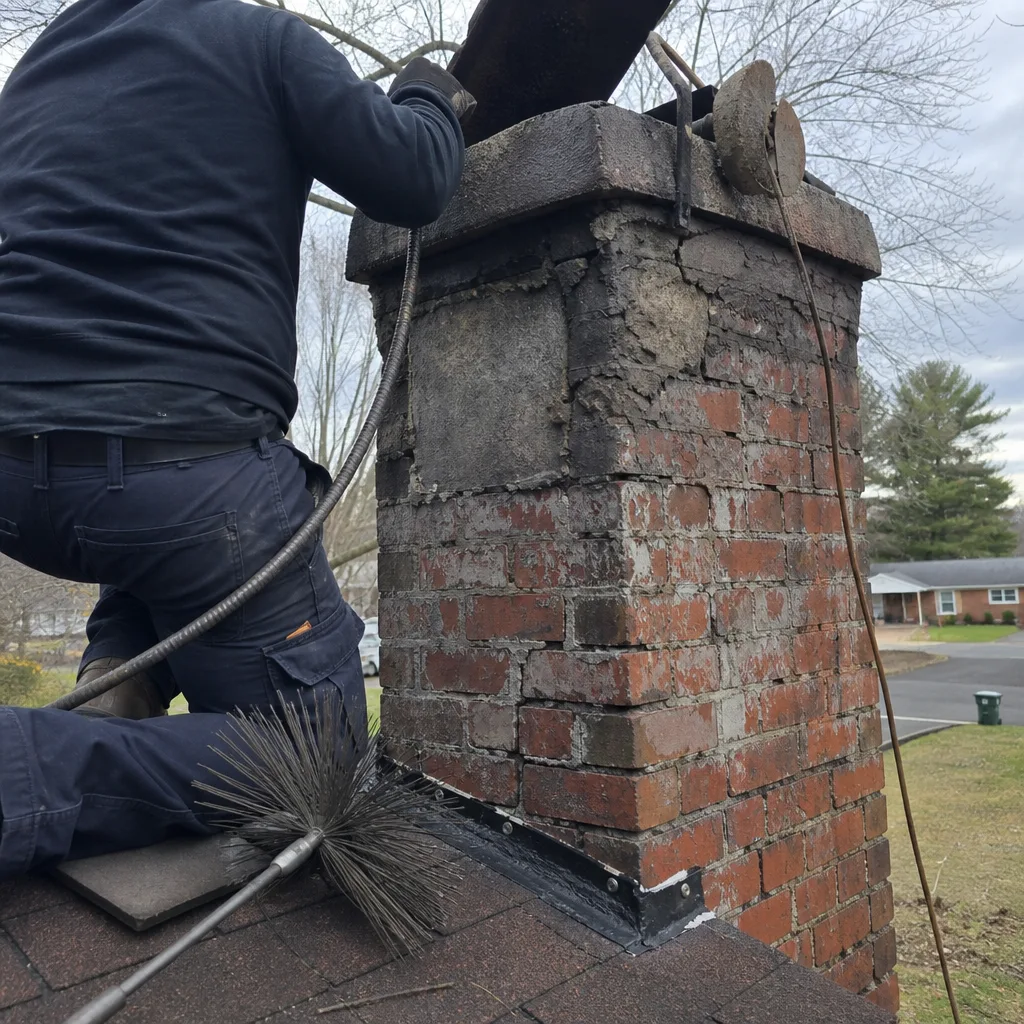 Before
 After
After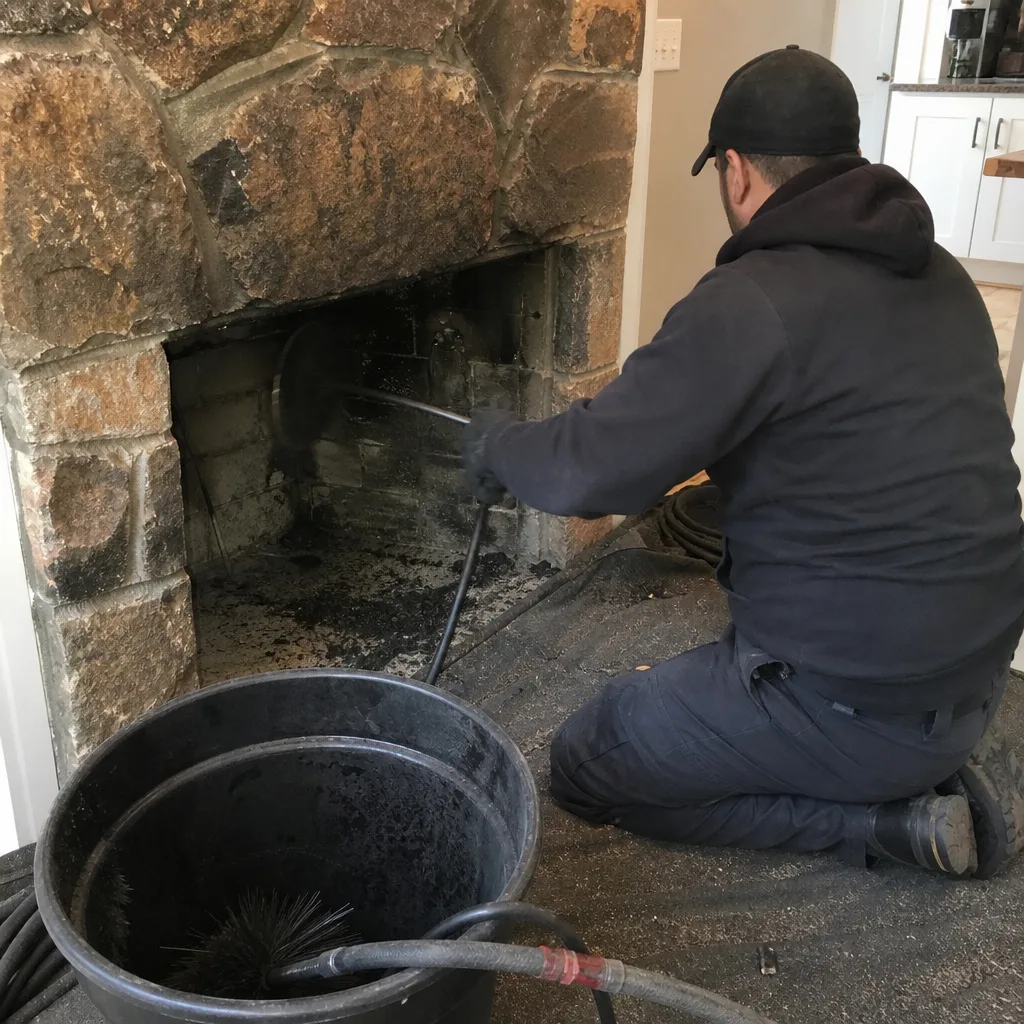 Before
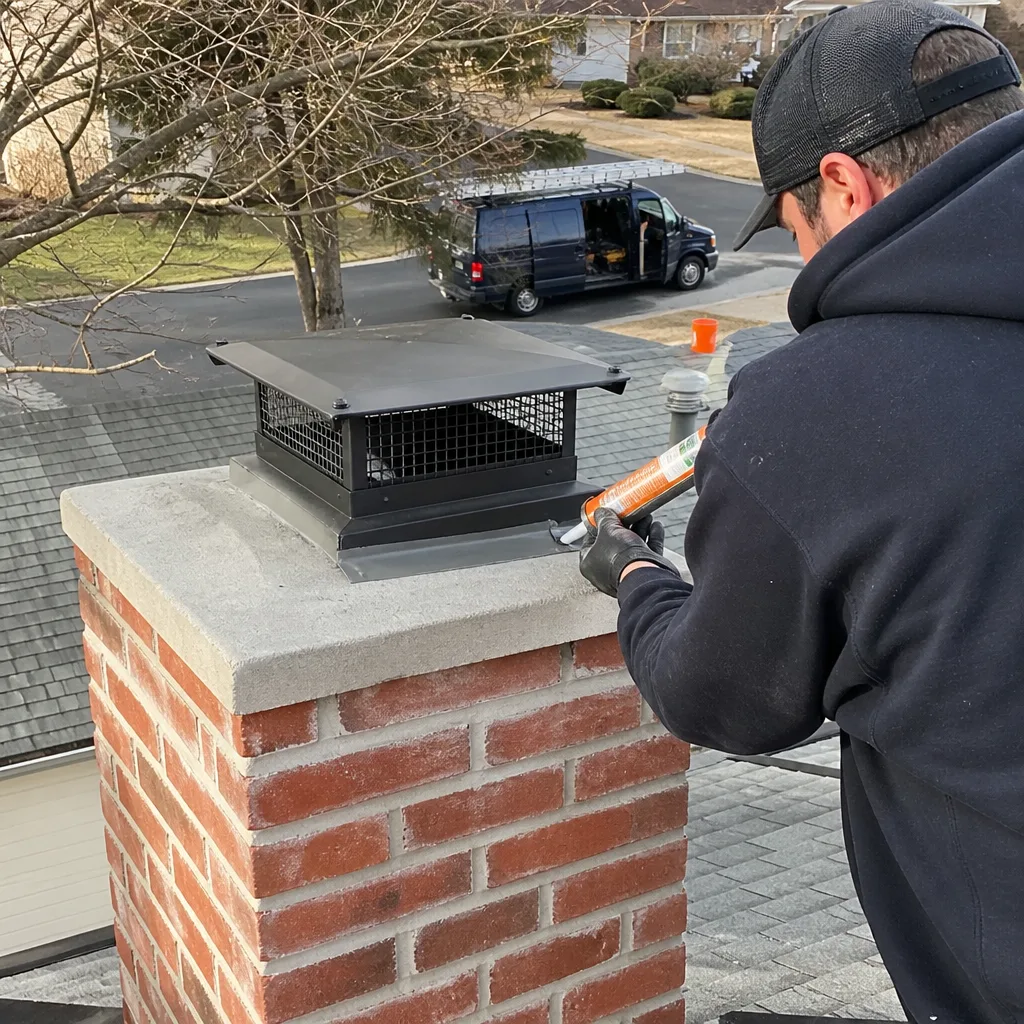 After
After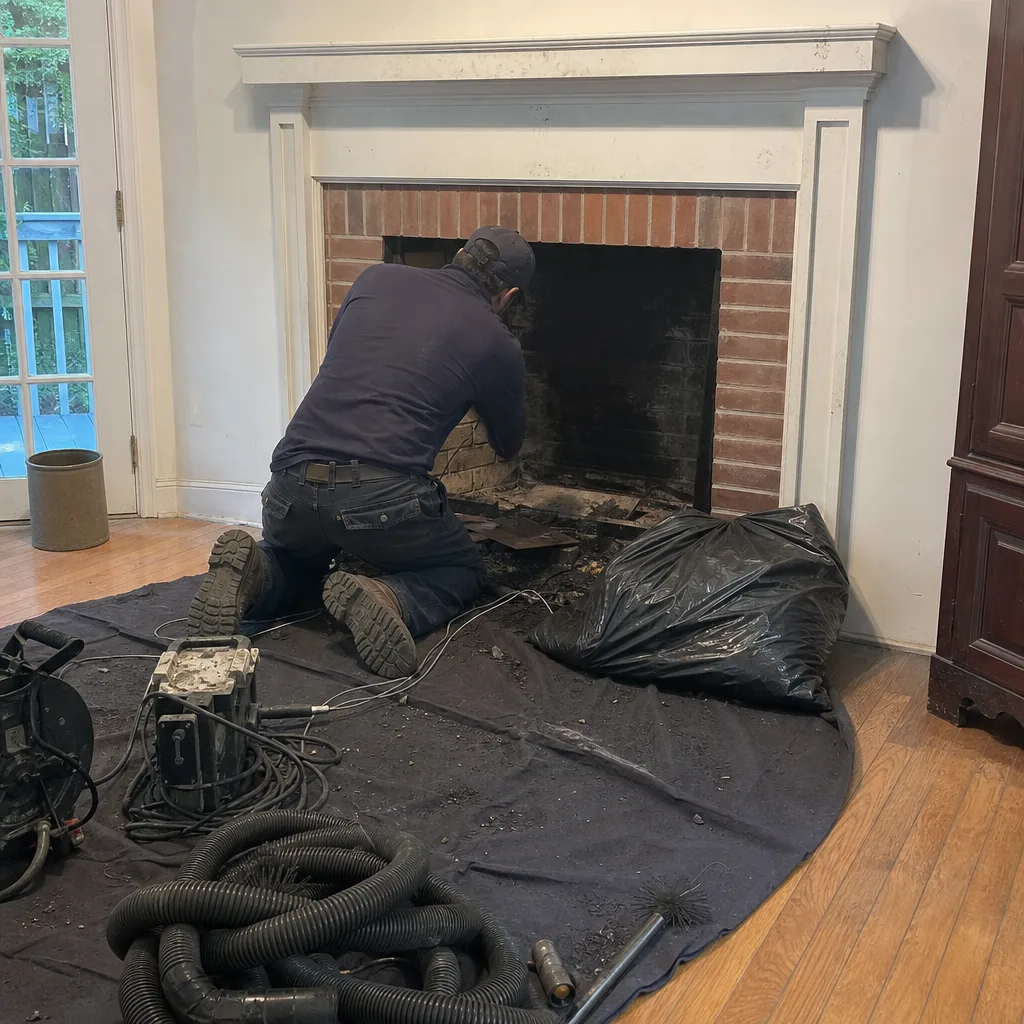 Before
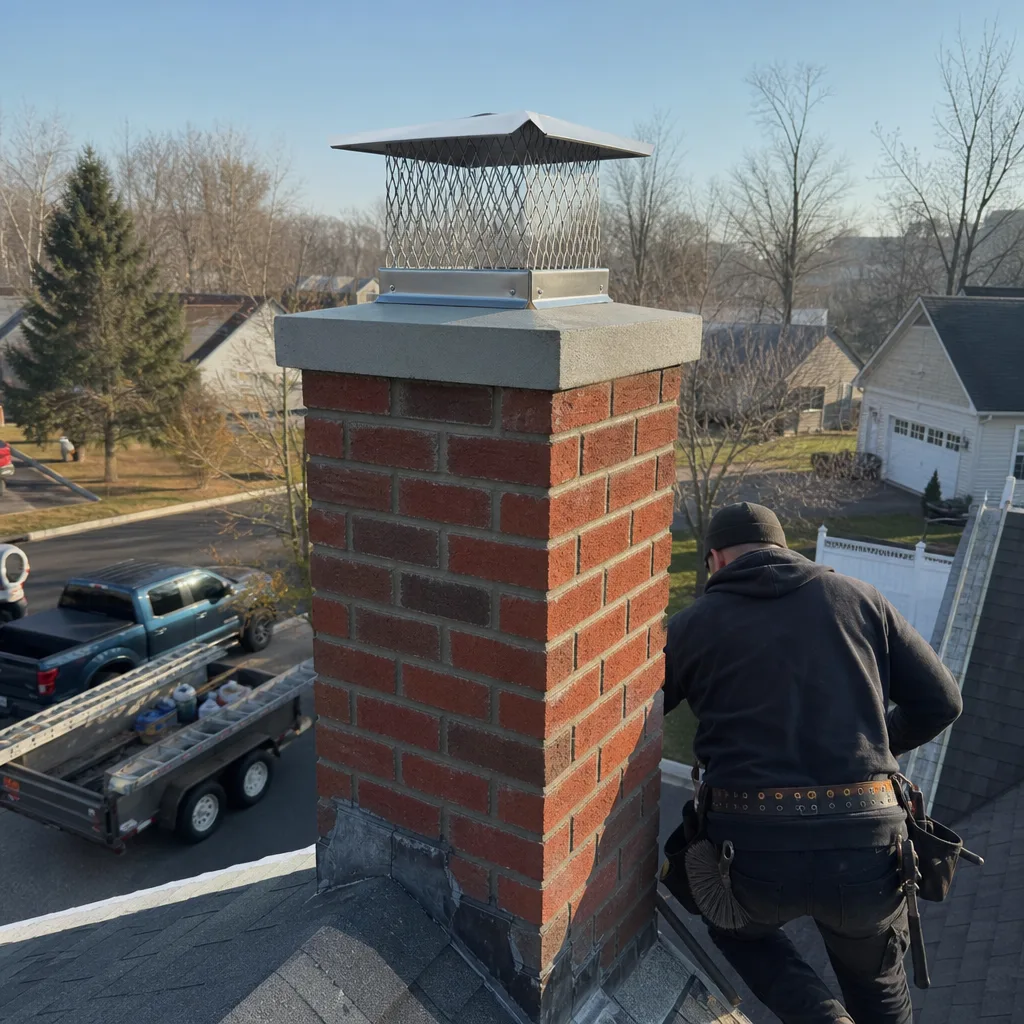 After
AfterSeasonal Chimney Cleaning Care for Bridgewater: Year-Round Homeowner’s Guide
A chimney cleaned in March is set up for spring moisture damage. One cleaned in November is already behind for a household that lit the first fire in October. In Bridgewater, where mature oak and maple canopies drop debris on a different schedule than open suburban lots, and where freeze-thaw cycles in Somerset County can crack a crown between seasons, the calendar most sweeps hand out was written for convenience, not for your climate. This guide assigns the right task to the right month, not the right year. You’ll learn what threatens your chimney each season, when to schedule work to avoid backlogs, and why timing matters as much as the sweep itself. For more guides & resources, visit our blog.
Quick Answer
Chimney maintenance in Bridgewater should follow a seasonal rhythm - our Chimney Cleaning & Sweep Maintenance Checklist for Bridgewater Homeowners covers this in detail: inspect in spring for moisture and animal damage, schedule your sweep in summer before September backlogs, complete pre-season cleaning and inspection by early October before the first fire, and watch for mid-winter creosote buildup if you burn more than three times weekly. The mature tree canopy in Bridgewater neighborhoods like Martinsville and Finderne accelerates debris accumulation compared to newer developments, shifting optimal timing earlier than generic advice suggests.
Table of Contents
- Spring: Inspect, Don’t Just Clean
- Summer: Beat the Backlog
- Fall: The Pre-Season Sequence
- Winter: Mid-Season Awareness
- How Bridgewater’s Tree Canopy Changes Your Schedule
- What Seasonal Chimney Care Costs in Bridgewater
- Common Mistakes to Avoid
- When to Call a Professional
- Frequently Asked Questions
Spring: Inspect, Don’t Just Clean
March through May is when most Bridgewater homeowners close the fireplace doors and forget the chimney exists. That’s a mistake. Spring is the season of moisture intrusion, animal nesting, and freeze-thaw damage - not creosote buildup. A chimney that was “fine” in February can develop serious problems by June.
The freeze-thaw cycle in Somerset County is brutal on masonry. Water seeps into hairline cracks during a March thaw, expands when temperatures drop below freezing at night, and widens those cracks with each cycle. By April, a crown that was intact in January can have gaps large enough to funnel water into the flue. We’ve pulled gallons of saturated debris from chimneys in Bradley Gardens and Green Knoll that looked clean in winter but were waterlogged by May.
Spring inspection priorities differ from fall. Here’s what a proper spring check should cover:
- Crown and cap integrity. Look for cracks, spalling, or missing pieces. Water penetration here destroys liners and smoke chambers from the top down.
- Flue liner condition. Moisture accelerates clay tile deterioration. A Level-2 camera inspection reveals cracks and gaps that winter use masked with soot.
- Animal evidence. Squirrels, raccoons, and chimney swifts establish nests in April and May. A cap with damaged screening invites occupation.
- Smoke chamber and damper. Corrosion from humid spring air can seize a damper that operated smoothly in January.
- Exterior masonry. Check for efflorescence (white mineral deposits) that signals water migration through brick.
Spring is also the ideal window for masonry repairs. The moderate temperatures allow proper curing of crown sealants and tuckpointing mortar. HeatShield crown repair products and Gelco cap installations performed in April set up the chimney to survive the next winter dry and intact. Wait until September, and you’re competing with every other homeowner who delayed - plus risking application in temperatures too cold for proper bonding.
One more reason spring matters for Bridgewater specifically: the town’s mature housing stock. Homes built in the 1960s and 1970s in neighborhoods like Chimney Rock and Burnt Mills often have original clay tile liners now past their functional lifespan. Spring moisture reveals deterioration that dry winter use conceals. Catching liner failure in April means scheduling replacement during the summer lull. Discovering it in October means choosing between delayed use and premium emergency pricing.
Summer: Beat the Backlog
June through August is the single most misunderstood season in chimney maintenance. Most homeowners assume summer is for ignoring the fireplace. The smart ones use it to schedule their sweep and any needed repairs.
Here’s the practical reality: every chimney sweep in Somerset County has a backlog starting September 15. The phone rings constantly after the first cool evening, and appointment windows stretch from days to weeks. A sweep scheduled in July is a sweep completed at your convenience. A sweep requested in October is a sweep fitted into whatever gap remains.
But summer scheduling isn’t just about convenience. It’s about preparation time. If your Level-2 inspection reveals liner damage, crown deterioration, or a failing damper, summer scheduling allows proper material ordering and unhurried execution. DuraFlex stainless steel liner installations, for instance, require precise measurement and custom fabrication. Rush that process in October, and you risk corners cut or substandard materials substituted.
Summer is also when to address the crown and cap if spring inspection flagged concerns. Masonry repairs need curing time - typically 28 days for full mortar strength, though sealants like HeatShield can be ready sooner. A crown rebuilt in July is fully hardened before the first hard freeze. One patched in November is vulnerable all winter.
For Bridgewater’s tree-heavy neighborhoods, summer brings a specific debris challenge. June’s cottonwood fluff, July’s maple samaras, and August’s early acorn drop accumulate on roofs and around chimney structures. These materials trap moisture against masonry and provide kindling for crown fires if they migrate into the flue. A summer sweep removes winter residue before it combines with fresh organic material, and a cap inspection ensures screening remains intact against the fall harvest still to come.
The summer lull also benefits homeowners financially. Our $89 Seasonal Tune-Up runs through August, and scheduling repair work in July often qualifies for our $50 Off Any Repair Over $250 offer - the same repair quoted in October carries no discount and may face material surcharges from supplier backlogs.
Fall: The Pre-Season Sequence
September through mid-October is when most Bridgewater homeowners think about their chimney. By then, the prepared ones are already done. The unprepared ones are gambling.
The pre-season sequence matters because cleaning after the last fire of winter is backward thinking. Creosote left in the flue all summer absorbs moisture, becomes acidic, and accelerates liner corrosion. More critically, the first fire of fall burns differently than midwinter fires - damper operation is stiff from disuse, the flue is cold and drafts poorly, and homeowners haven’t yet re-established safe burning habits. A clean, inspected chimney before first use eliminates variables.
The proper fall sequence for Bridgewater households:
- Schedule by Labor Day. This guarantees completion before consistent heating demand begins.
- Level-2 inspection with camera documentation. Photos you can see, a plain-English verdict - no surprises after the first fire.
- Sweep if creosote exceeds 1/8 inch. The National Fire Protection Association standard, not a guess.
- Test all components under operating conditions. Damper, smoke chamber, firebox, and exterior draft.
- Address findings before first fire. No “we’ll watch it” - documented problems become documented solutions.
Bridgewater’s specific fall risk is the temperature inversion pattern common in the Raritan Valley. Cool air settles in the valley on calm autumn evenings, creating poor draft conditions that push smoke into living spaces. A chimney that drafted adequately in summer testing may struggle in October’s atmospheric conditions. Experienced sweeps account for this; rushed fall cleanings often don’t.
The 90-Day Done Right Promise governs all fall work at Hearthstone Chimney Co. If a repair performed in September doesn’t hold through burning season, we make it right - in writing, no arguing. That’s the Keystone Standard we’ve operated under since 1984, and it’s why homeowners in Bridgewater’s older neighborhoods trust us with chimneys their grandparents used.
Winter: Mid-Season Awareness
Mid-October through February is high-use season. For households burning wood more than three times weekly, this is also when hidden problems declare themselves.
Mid-season chimney checks are not full sweeps. They’re targeted inspections for households pushing their systems hard. Indicators that an unscheduled winter visit is warranted:
- Smoke spillage when opening the loading door, especially on calm, cold days
- Visible creosote flakes in the firebox or on the hearth
- Burning odor noticeable in upstairs rooms, indicating liner breach or smoke chamber leakage
- Damper increasingly difficult to operate, suggesting corrosion or creosote binding
- Exterior ice dam formation near the chimney, signaling heat loss from liner failure
Winter inspections focus on operational safety, not cosmetic concerns. We check draft performance under actual burning conditions, verify clearances to combustibles haven’t shifted with heating system cycling, and assess whether accumulated creosote from heavy use has reached critical levels. For households burning unseasoned wood - still common in Bridgewater where homeowners split from their own oak stands - creosote accumulation can exceed annual rates in a single month.
The between-season visit is particularly valuable for homes with older chimney repair histories. Previous tuckpointing, crown rebuilding, or liner patching faces its first thermal stress test under sustained winter use. HeatShield applications and Olympia Chimney liner installations we completed in prior seasons get their real-world validation now. Problems caught in January prevent February emergencies.
One winter-specific Bridgewater concern: the township’s mix of wooded lots and developed neighborhoods creates variable wind patterns. Chimneys on homes near the Watchung Mountains or along the Raritan River experience different draft dynamics than those in denser subdivisions. A mid-season check verifies that caps and termination configurations remain appropriate for local conditions.
How Bridgewater’s Tree Canopy Changes Your Schedule
Generic chimney advice assumes suburban conditions: some trees, moderate debris, predictable accumulation. Bridgewater’s mature canopy - particularly in established neighborhoods like Pleasant Run, Country Club Estates, and the older sections of Finderne - breaks that model.
Mature oaks and maples common to Somerset County produce debris on a different timeline than the ornamental plantings in newer developments. Here’s how the canopy affects your chimney maintenance calendar:
- Spring (April-May): Oak catkins and maple flowers shed fine particulate that clings to damp flue surfaces. Combined with winter creosote residue, this creates a sticky layer that standard brushing may not fully remove. Early summer sweeps address this before it hardens.
- Early summer (June): Cottonwood fluff, where present, accumulates on caps and in screening. Blocked airflow reduces draft efficiency and traps moisture.
- Late summer (August-September): Early acorn drop begins in Bridgewater’s red oak stands. Acorns rolling down metal flues sound like gunshots and can damage clay tile liners on impact. Cap screening prevents entry but requires inspection for damage.
- Fall (October-November): The main leaf drop coincides with peak burning season. Gutters and roof valleys near chimneys clog with organic material that holds moisture against masonry and provides fuel if ignited by sparks.
- Winter (December-February): Bare branches expose chimneys to wind patterns that summer foliage moderated. Caps and crowns face direct exposure; previously sheltered masonry may show accelerated weathering.
Homes in more open areas - newer Bridgewater subdivisions with younger plantings, or lots cleared for construction - experience less debris interference but greater wind exposure and temperature fluctuation. Their maintenance needs shift toward masonry preservation and away from debris management.
The practical implication: if your home sits among mature oaks, your optimal sweep timing is June or July, before summer debris hardens in the flue and after spring nesting season ends. If you’re in a cleared lot, September scheduling works fine. Most “annual cleaning” advice ignores this distinction entirely.
What Seasonal Chimney Care Costs in Bridgewater
Pricing for chimney maintenance varies by season, service depth, and what inspection reveals. For a detailed Chimney Cleaning Cost Breakdown: The Bridgewater Homeowner’s Reference for 2026, see our dedicated guide. Here’s what Bridgewater homeowners should expect:
| Service | Typical Range | Best Scheduling Window |
|---|---|---|
| Level-1 sweep and basic inspection | $150-$250 | June-August |
| Level-2 inspection with camera documentation | $250-$400 | March-May or June-August |
| Crown repair or sealant application | $300-$800 | April-June |
| Chimney cap replacement (standard) | $200-$500 | Year-round; avoid December-February |
| Stainless steel liner installation (DuraFlex) | $2,500-$5,000 | June-August |
| Smoke chamber parging (HeatShield) | $1,200-$2,500 | April-September |
| Tuckpointing (per square foot) | $15-$30 | April-October |
These ranges reflect Bridgewater’s market specifically, where labor costs track slightly below northern New Jersey metro areas but material costs remain consistent statewide. The $89 Seasonal Tune-Up covers Level-1 sweep and inspection for qualifying chimneys - call for details on whether your system qualifies.
Critical cost principle: nothing is recommended without camera evidence you can see yourself. If a sweep recommends liner replacement, crown rebuilding, or any significant repair, the photos should make the problem obvious. Vague verbal warnings without documentation are a red flag. Our Level-2 inspections end with photos and a plain-English verdict - documented like an engineer, explained like a craftsman.
Financing considerations: the permanent 5% Senior and Veteran discount applies to all services, and our Free Second Opinion offer protects homeowners who’ve received alarming estimates elsewhere. We’ve reviewed competitor quotes in Bridgewater that recommended $4,000 in unnecessary work - a second camera inspection confirmed the chimney needed only a $200 cap repair.
Common Mistakes to Avoid
- Cleaning in March and calling it done for the year. Spring cleaning removes winter creosote but leaves the chimney vulnerable to moisture damage and summer debris accumulation. It’s a start, not a finish.
- Waiting for the first cold snap to schedule. By mid-September, every sweep in Somerset County is booked two to three weeks out. Your “urgent” October request joins fifty others.
- Ignoring the cap because “it looks fine from the ground.” Cap screening damage is invisible from below. Squirrels can enlarge a quarter-inch gap to four inches in a single afternoon.
- Assuming new construction chimneys need no early attention. Bridgewater’s 1990s and 2000s subdivisions often have builder-grade clay liners and minimal crown overhangs. These fail faster than older, better-built chimneys.
- Burning unseasoned oak from your own property. Oak needs 18-24 months to season properly. Burning at 25% moisture content creates dangerous glazed creosote that standard brushing won’t remove.
- Accepting repair recommendations without photo evidence. Any sweep who can’t show you the crack, gap, or deterioration is selling speculation, not service.
- Treating “annual cleaning” as a calendar check rather than a usage-based decision. A chimney used twice weekly needs different attention than one used twice monthly. Frequency should match burn volume, not wall calendar.
When to Call a Professional
Call a sweep when you notice smoke where it doesn’t belong, odors that persist beyond burning, or any change in draft performance. Call before problems become emergencies - a crown crack in April is a repair; the same crack in January, after water has frozen and expanded through multiple cycles, may require rebuilding.
Call when you’re new to a home and don’t know the chimney’s history. Call when you’ve burned for a season without inspection. Call when a previous sweep recommended work you postponed.
Hearthstone Chimney Co. offers free estimates in Bridgewater. A live person answers every call, 24 hours a day, 7 days a week - not a voicemail, not a callback queue. Our background-checked, uniformed technicians complete most jobs in a single visit, with no-hassle upfront pricing so the number on the estimate is the number on the invoice. Call (908) 589-8342 to schedule, or visit our Hearthstone Chimney Co. home page to learn more about our services.
Frequently Asked Questions
A standard Level-1 chimney sweep and inspection in Bridgewater typically runs $150 to $250, with Level-2 camera inspections ranging from $250 to $400 depending on flue accessibility and number of appliances served. The $89 Seasonal Tune-Up covers basic sweep and inspection for qualifying systems through August. Call (908) 589-8342 for exact pricing on your specific chimney - estimates are free.
The National Fire Protection Association recommends annual inspection for all chimneys, with sweeping as needed based on creosote accumulation. In practice, Bridgewater households burning wood more than three times weekly during heating season need annual sweeping; occasional users may extend to every two years with confirmed low accumulation. Homes under mature oak canopies or burning unseasoned wood should inspect more frequently due to accelerated debris and creosote buildup.
You need a new liner when camera inspection reveals cracks, gaps, or deterioration that compromise containment of combustion gases - not because someone says so without evidence. Clay tile liners in Bridgewater’s 1960s-1980s housing stock commonly fail after 40-60 years. DuraFlex stainless steel liners are the professional-grade replacement we install when clay failure is documented. If a sweep recommends liner replacement, demand to see the photos yourself. We provide them without asking.
Skipped maintenance leads to three predictable outcomes: creosote accumulation increases chimney fire risk, moisture intrusion destroys masonry from inside, and liner deterioration allows carbon monoxide infiltration into living spaces. In Bridgewater’s mature housing stock, we’ve seen $200 neglected sweeps become $8,000 rebuilds within five years. The hazard is real, but so is the repair cost escalation - both are preventable with scheduled care.
Homeowners can perform basic firebox and damper cleaning, but flue sweeping requires proper brushes, rods, and vacuum equipment that most households don’t maintain. More critically, without camera inspection, you cannot assess liner condition, crown integrity, or smoke chamber deterioration - the components where real dangers hide. For safety and documentation, professional service is the sound choice. We’re state-licensed, insured & bonded, and every job ends with photos and a written verdict.
Summer chimney odor typically indicates creosote residue absorbing humid air, animal intrusion, or water penetration activating organic decay. Bridgewater’s summer humidity, combined with mature tree canopy shading that keeps chimneys cooler and damper, accelerates these issues. A summer sweep removes odor-causing residue, and inspection identifies entry points for moisture or animals. The smell is a symptom - proper diagnosis prevents recurrence.
The Bottom Line
Bridgewater chimneys face four distinct seasonal threats, and the calendar matters. Inspect in spring for moisture and animal damage, not just creosote. Schedule your sweep in summer to beat backlogs and allow repair curing time. Complete pre-season preparation by early October, before atmospheric conditions shift. Monitor mid-winter for heavy-use indicators that demand attention. And account for your specific tree canopy - mature oaks and maples accelerate debris timing in ways generic advice ignores. Done right, seasonal chimney care prevents emergencies, controls costs, and keeps your fireplace safe for the decades you plan to stay in your home. Done wrong, or done on the wrong schedule, it becomes another contractor story you tell for years.
Written by Russell Haines, Owner at Hearthstone Chimney Co., serving Bridgewater since 2014.