
Last updated September 10, 2026
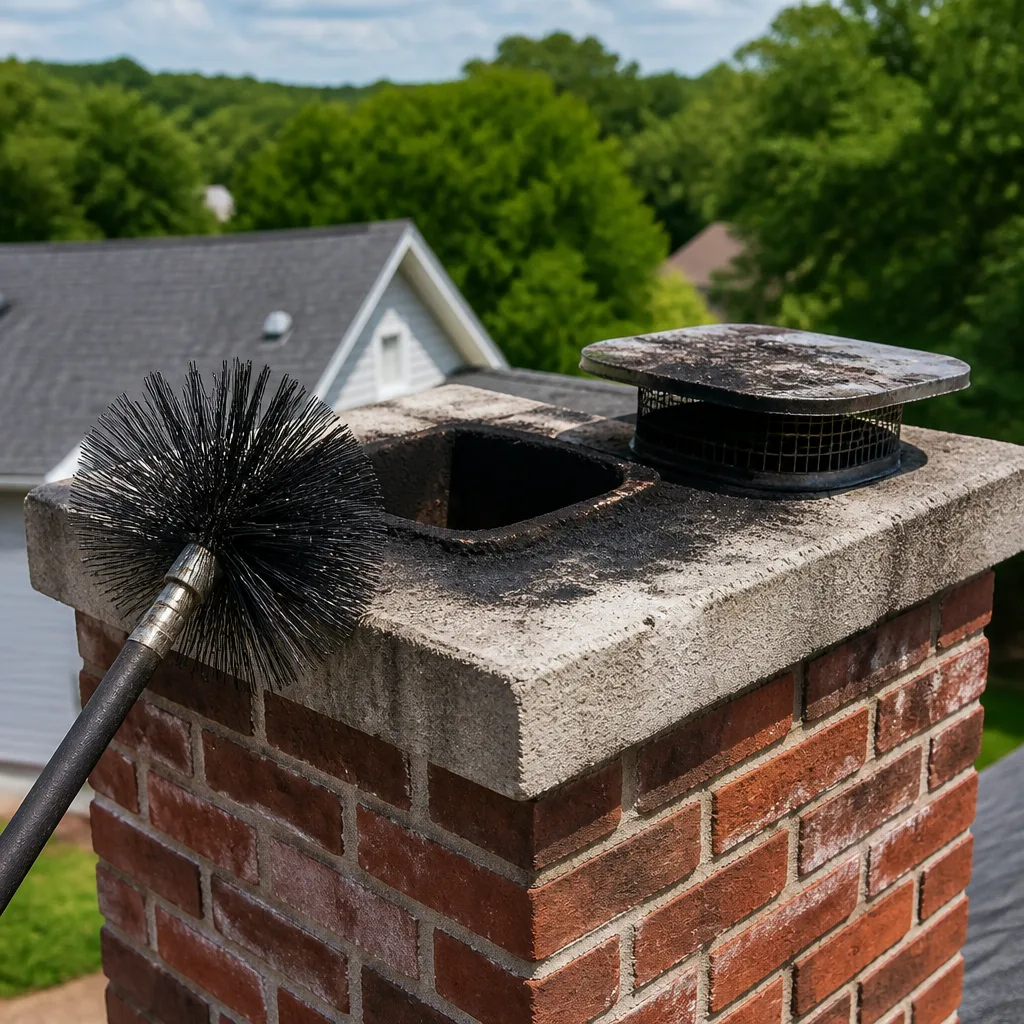
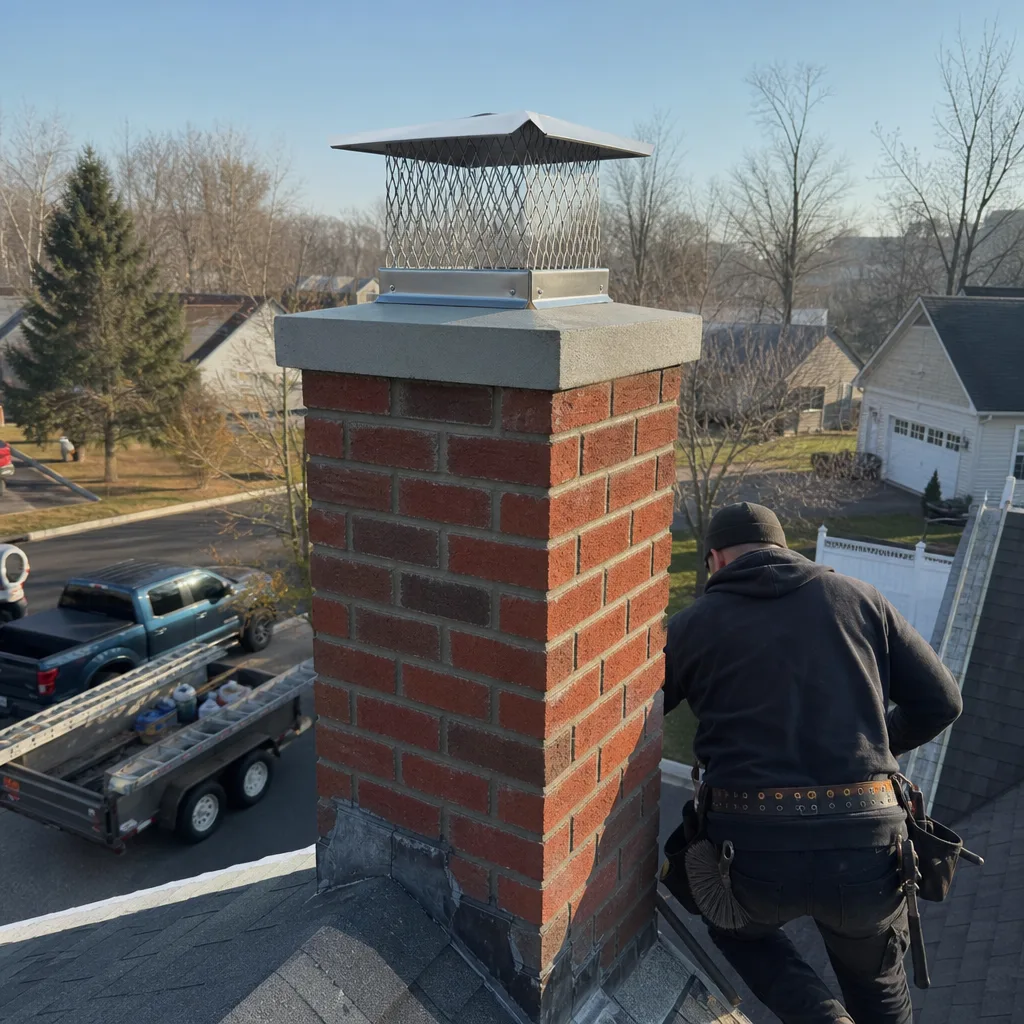
Level 1 sweep and inspection to the NFPA 211 annual standard - flue, crown, cap, and flashing checked and photographed
Chimney sweep logs do not sweep chimneys. They loosen some creosote - which then falls where a brush and vacuum still have to collect it.
 Before
 After
After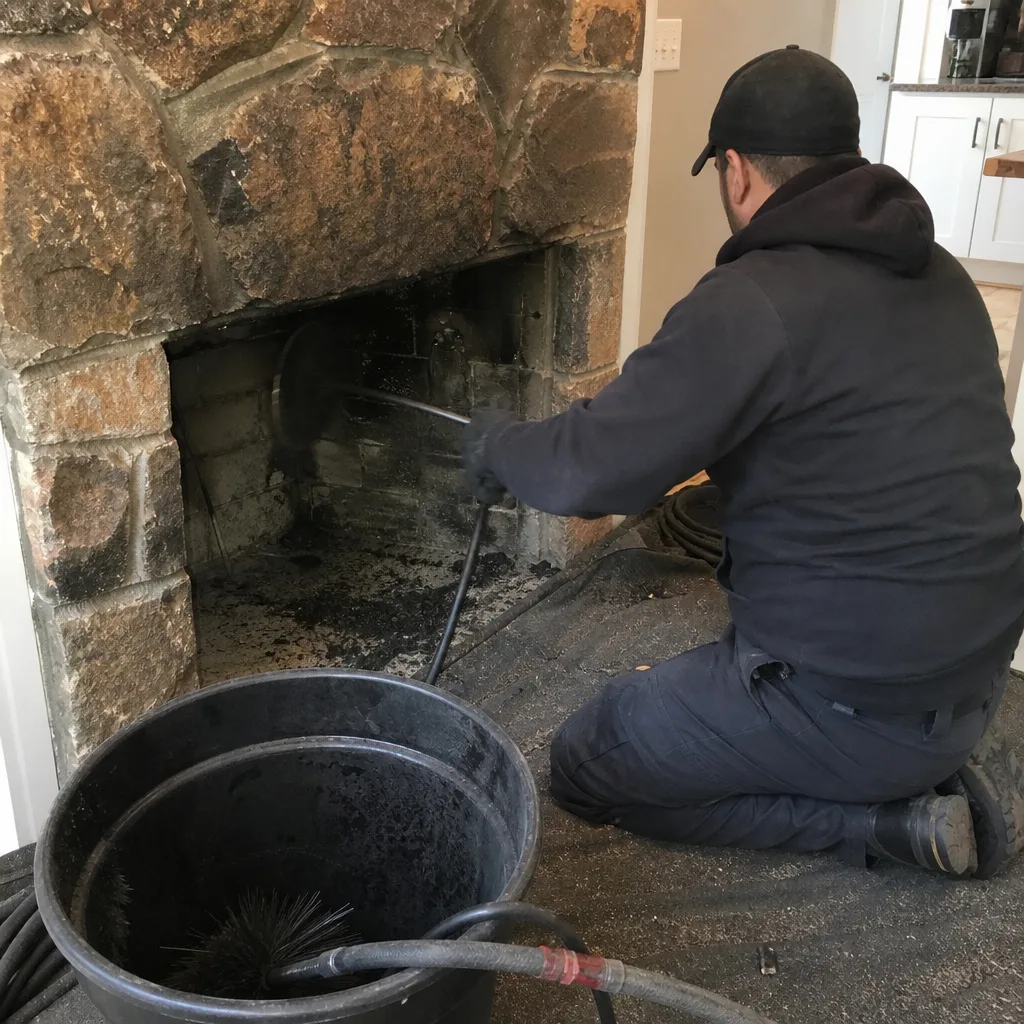 Before
 After
After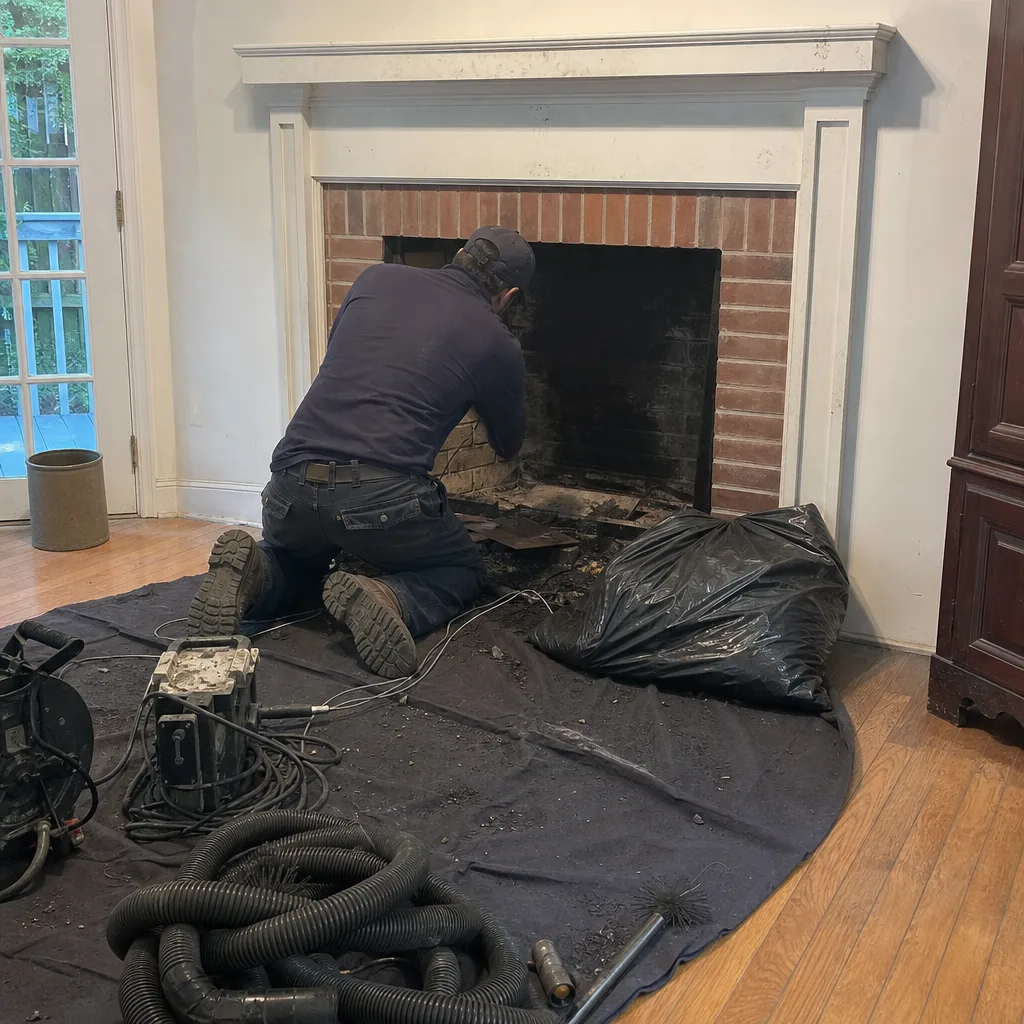 Before
 After
AfterChimney Cleaning & Sweep Maintenance Checklist for Bridgewater Homeowners
Most chimney checklists read like a packing list - useful until you find something unexpected and have no idea what it means. In Bridgewater, where freeze-thaw cycles split crowns and oak-heavy cordwood leaves dense, acidic creosote, a checklist without consequences is worse than useless. It gives homeowners false confidence. This guide is built differently: every item carries a pass/flag/stop-use verdict so nothing gets misread as routine when it isn’t. For deeper background, see our Complete Guide to Chimney Cleaning in Bridgewater. You’ll learn what to look for, what it means, and what to do next - before a small problem becomes a chimney fire or a carbon monoxide entry point.
Quick Answer
A thorough chimney maintenance checklist for Bridgewater homeowners covers four phases: a pre-season exterior walk-around for crown, cap, and flashing damage; interior checks for smoke rollout, damper function, and odor changes; mid-season assessment for high-burn households; and post-season shutdown to block moisture during freeze-thaw months. Anything beyond superficial cleaning requires a Level-2 camera inspection by a certified sweep.
Table of Contents
- Pre-Season Exterior Walk-Around: What to Check Before First Fire
- Interior Indicators You Can Assess Without Tools
- Mid-Season Check for High-Use Households
- Post-Season Shutdown for Bridgewater’s Freeze-Thaw Climate
- The Documentation Habit: Photographing Your Chimney Annually
- Creosote Types and What Each Means for Your Sweep Schedule
- Common Mistakes to Avoid
- When to Call a Professional
- Frequently Asked Questions
- The Bottom Line
Pre-Season Exterior Walk-Around: What to Check Before First Fire
In Bridgewater, the exterior tells the story before you ever strike a match. Our freeze-thaw cycles - sometimes forty swings in a single winter - expand water trapped in mortar joints, crown concrete, and brick faces. By October, the damage is done. You just need to spot it.
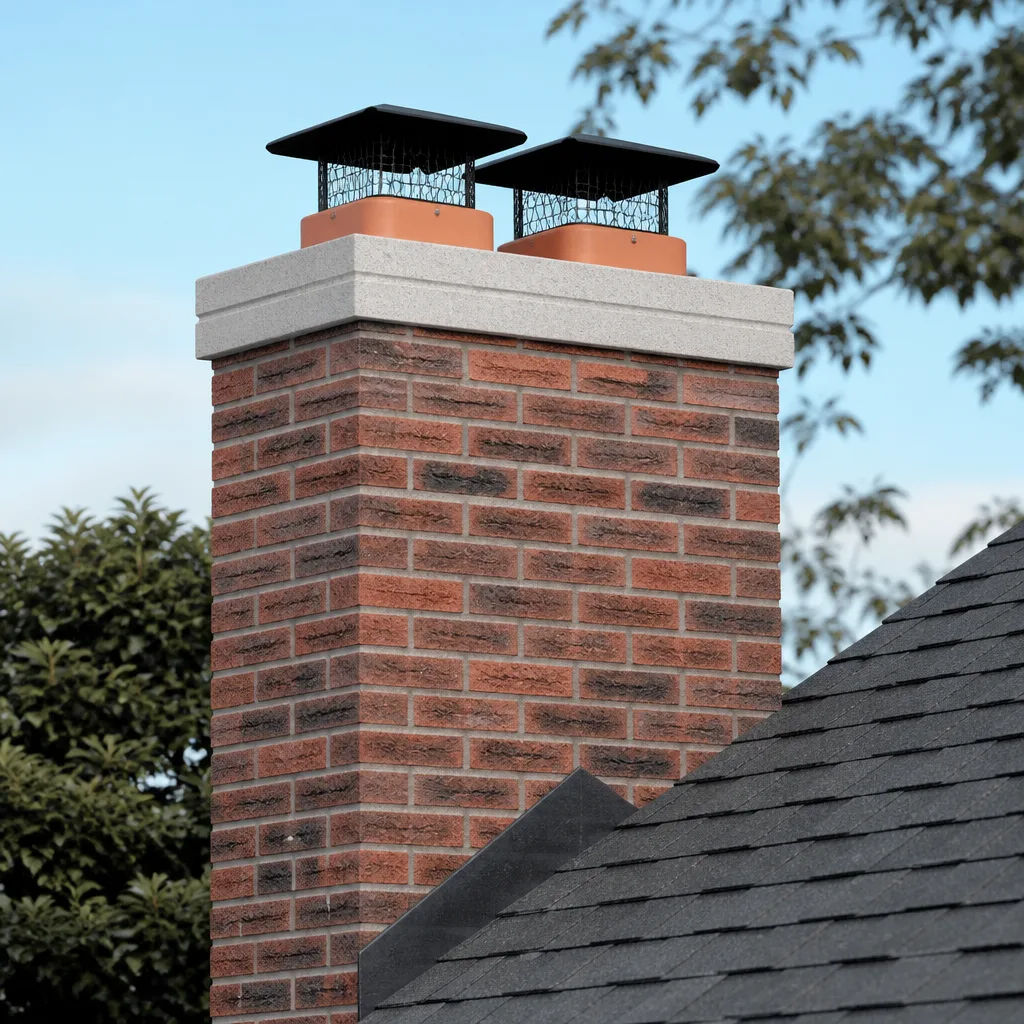
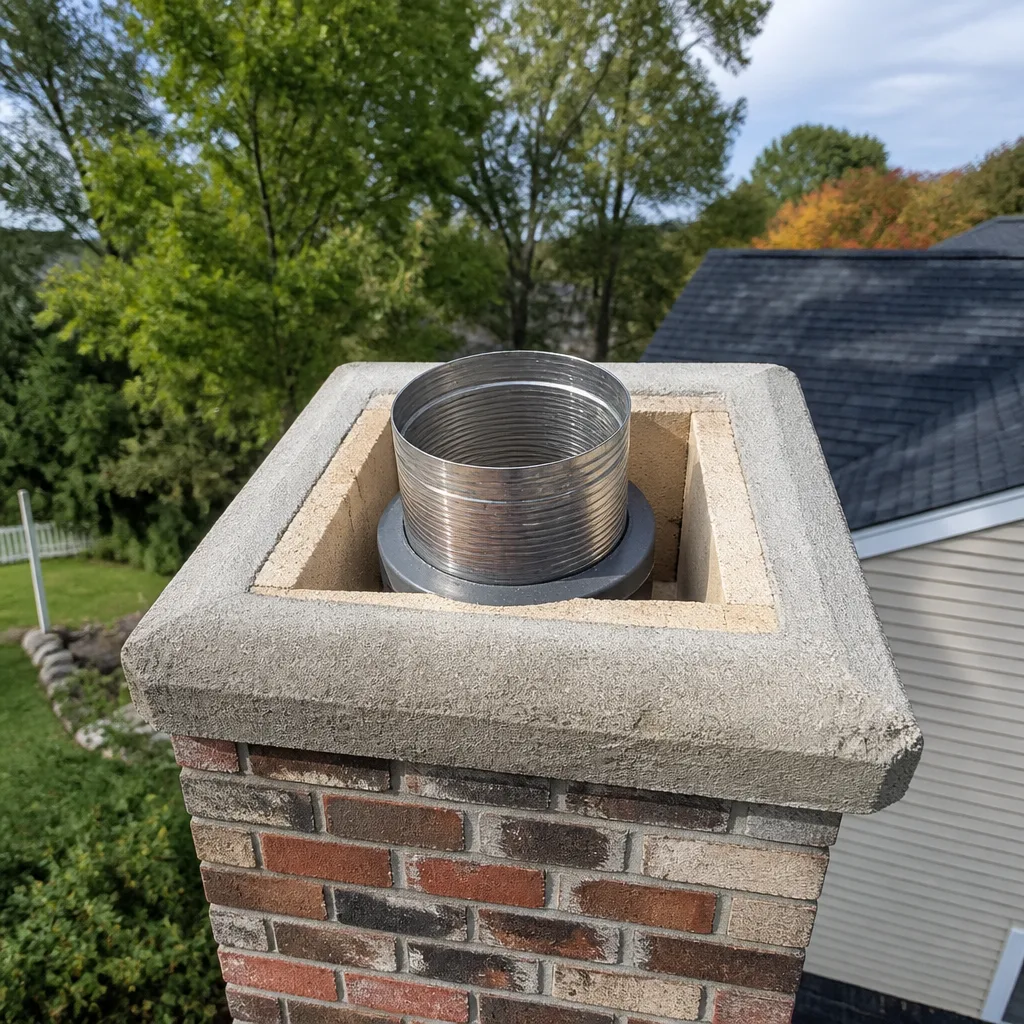
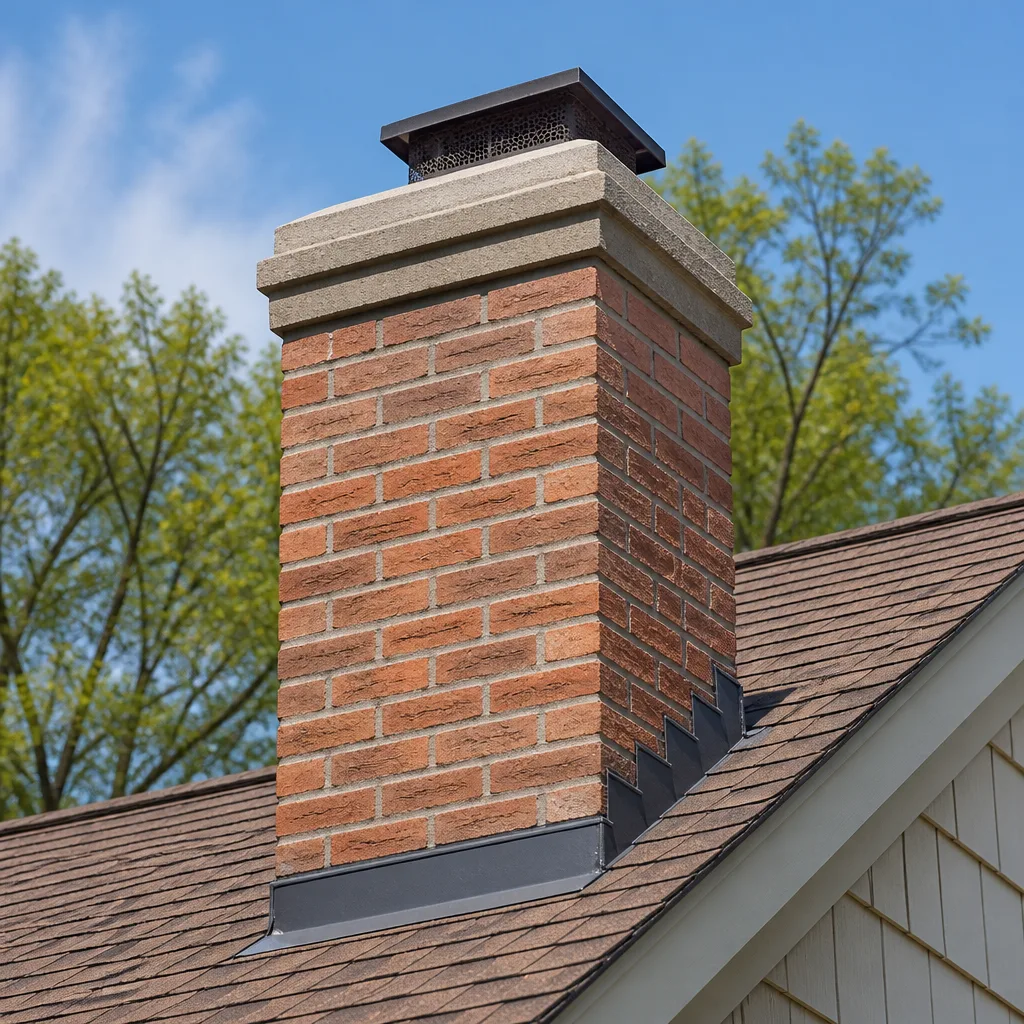
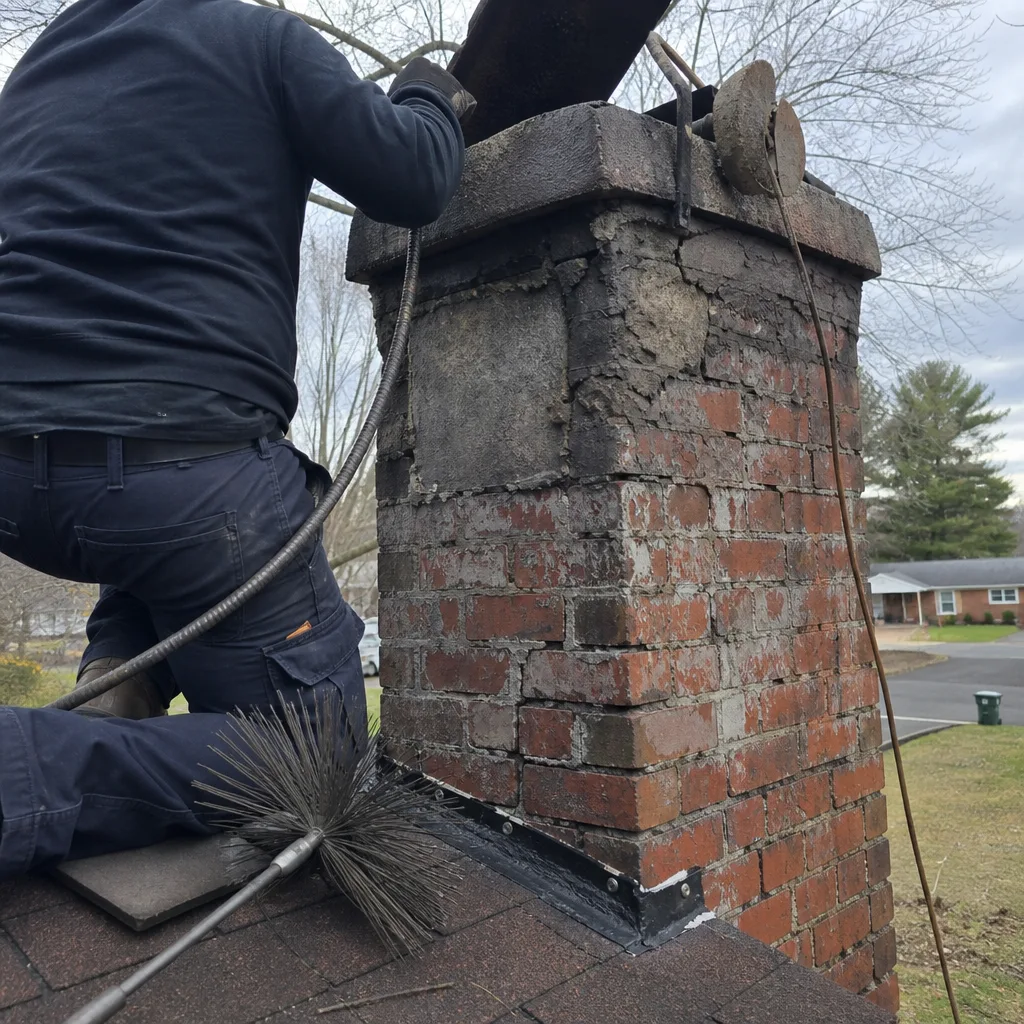
Start at the top and work down. The crown is the concrete slab that seals the chimney top around the flue tile. A sound crown sheds water like a roof. A failed crown funnels it into the structure. Look for hairline cracks wider than a dime, spalling (flakes coming off), or pooling stains. Verdict: hairline cracks get flagged for professional sealant - we use HeatShield crown coat systems when the substrate is sound. Spalling or displacement means stop-use until repair; water is already inside.
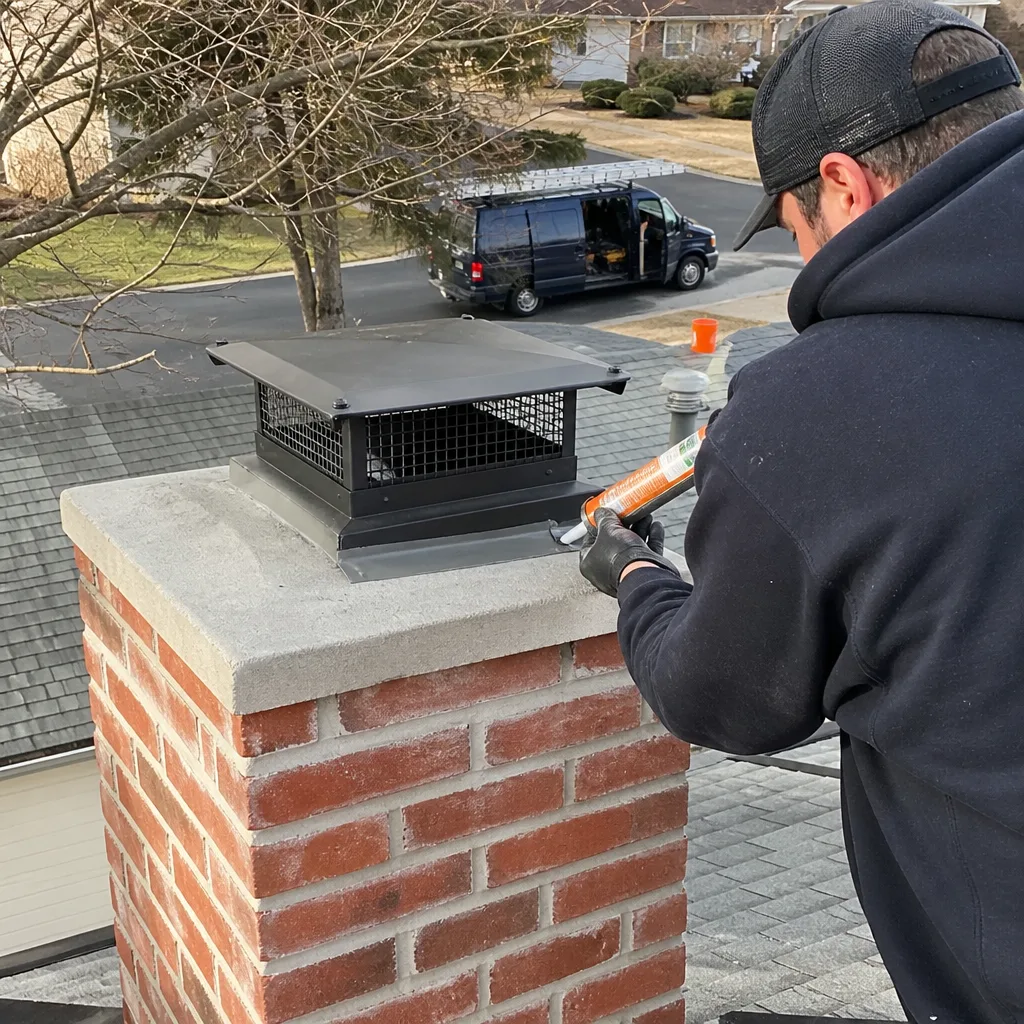
The cap sits above the crown and keeps rain, animals, and debris out of the flue. A missing cap, a rusted-through mesh, or a cap knocked askew by winter ice is an immediate flag. In neighborhoods near the Raritan River, we’ve found squirrel and raccoon entry to be more common than homeowners expect. A cap with intact mesh and proper overhang gets a pass. Anything less gets flagged - and if you hear scratching or see nesting material, that’s stop-use until a sweep clears the flue.
Flashing is the metal seam where chimney meets roof. In Bridgewater’s older homes, particularly in the Finderne and Green Knoll areas, original flashing was often tarred rather than properly counter-flashed. Look for lifted seams, rust streaks on shingles, or water stains on the ceiling inside. Flashing leaks rarely fix themselves. Flag immediately.
Brick and mortar joints complete the picture. Repointing needs are common on 1970s and 1980s construction in Bridgewater, where softer mortar was used. Probe gently with a key: powdering or recessed joints need repointing. Spalled brick faces (the brick itself flaking) indicate moisture saturation and freeze-thaw damage. Flag for masonry evaluation.
Exterior Verdict Summary:
- Pass: Intact crown, secure cap with mesh, sealed flashing, sound mortar joints, no spalling
- Flag: Hairline crown cracks, minor flashing lift, early mortar erosion - schedule professional evaluation within two weeks
- Stop-use: Missing or damaged cap, significant crown damage, water stains inside, spalled brick, animal entry - no fires until repaired
Interior Indicators You Can Assess Without Tools
You don’t need a camera to catch serious problems early. You need attention to changes. The fireplace and chimney system gives specific signals when something is wrong. The key is knowing normal from abnormal.
Smoke rollout patterns are the most urgent. A healthy fireplace draws smoke up the flue. If smoke spills into the room during lighting, that’s often cold air in the flue - common in Bridgewater’s unheated chimneys on first cold nights. Open the damper fully, warm the flue with a small paper torch, and retry. If smoke still rolls out after the fire is established, or if it spills consistently from the fireplace face rather than the top, flag immediately. This indicates blockage, improper flue sizing, or negative pressure from modern HVAC systems - all stop-use conditions until diagnosed.
Damper resistance and position matter more than most homeowners realize. The damper should open fully with smooth resistance and seat completely when closed. A damper that sticks, grinds, or won’t seal allows heated air to escape all winter and admits downdrafts in summer. In homes near Chimney Rock and the higher elevations of Bridgewater, we’ve seen dampers corrode from increased moisture exposure. If you feel grittiness or see rust flakes, flag for replacement. A damper that won’t fully open is stop-use - restricted airflow accelerates creosote buildup and can push combustion gases into living space.
Odor types tell different stories:
- Sharp, acidic smell (like bad barbecue): Fresh creosote buildup. Normal after heavy use, but indicates you need sweeping before next season.
- Damp, musty odor: Water entry. Check the exterior cap and crown; this is flag-for-repair territory.
- Dead/decay smell: Animal presence. Stop-use until flue is inspected - decomposition releases harmful bacteria and gases.
- Chemical or asphalt odor: Chimney fire residue or nearby flue gas leak. Stop-use immediately and call a professional.
Visual checks: Shine a flashlight up the firebox. Look for white efflorescence (salt deposits from moisture), black streaking down the back wall (indicating smoke leakage at a joint), or gaps between firebrick and flue tile. Any of these flag for camera inspection.
Interior Verdict Summary:
- Pass: Clean draw, smooth damper operation, no persistent odors, sound firebrick
- Flag: Intermittent smoke spillage, damper wear, mild odors - schedule evaluation
- Stop-use: Consistent smoke rollout, stuck damper, animal odor, chemical smell, visible gaps - no fires until cleared
Mid-Season Check for High-Use Households
If you burn more than two cords of wood per season in Bridgewater, once-yearly sweeping is not sufficient. The math is straightforward: dense hardwoods like oak and hickory, common in Central Jersey firewood markets, produce more creosote per BTU than softwoods. Two cords of seasoned oak in an older fireplace with a 13×13 flue tile can build Stage 2 or Stage 3 creosote by January.
When to self-triage mid-season:
- Check your fuel rate. A cord is a stack 4x4x8 feet. If you’ve burned through your first cord by New Year’s, you’re in the high-use category.
- Inspect the firebox weekly after the first month of regular use. Look for black, flaky deposits on the back wall above the fire. Stage 1 creosote is sooty and brushes off. Stage 2 is shiny, hard, and tar-like. Stage 3 is glazed, hardened, and requires rotary removal - not a standard brush.
- Listen for changes. A chimney fire often sounds like a freight train or low rumble, but pre-fire conditions can cause popping, snapping, or increased draft noise as creosote restricts the flue.
- Monitor performance. If fires are harder to start, burn sluggishly, or require the damper fully open when they previously didn’t, restricted airflow from buildup is likely.
In Bridgewater’s older neighborhoods - particularly around the historic districts and pre-1980s developments - flue liners are often uninsulated clay tile. These cool faster than stainless steel, accelerating condensation and creosote formation. A mid-season check in January is prudent for any household burning two-plus cords.
High-Use Verdict Summary:
- Pass: Sooty deposits only, normal draft, no performance changes - continue with planned spring sweep
- Flag: Stage 2 creosote appearance, minor draft changes - schedule interim sweep within two weeks
- Stop-use: Stage 3 glaze, any fire-like sounds, significant draft restriction - extinguish current fire, do not relight until professional evaluation
Our Chimney Cleaning & Sweep in Bridgewater service includes mid-season appointments for high-burn households, with no-hassle upfront pricing so the number on the estimate is the number on the invoice.
Post-Season Shutdown for Bridgewater’s Freeze-Thaw Climate
How you close down the system in March determines what you find in October. Bridgewater’s spring freeze-thaw is as destructive as winter’s, and summer humidity introduces its own problems.
Step-by-step shutdown protocol:
- Schedule the final sweep before shutdown, not after. Creosote left in the flue over summer absorbs humidity, becomes acidic, and accelerates liner corrosion. In unlined chimneys common in pre-1960s Bridgewater homes, this acidity attacks mortar joints directly. We recommend sweeping by April 1st for households that stop burning by St. Patrick’s Day.
- Leave the damper open - partially. This is counterintuitive but correct. A fully closed damper traps humid air in the flue. A fully open damper invites downdrafts and animal entry. Open 2-3 inches to allow air circulation without full exposure. Mark your calendar to close it fully before first fall use.
- Verify cap and crown condition one final time. Spring storms in Somerset County can be severe. A cap that was marginal in October may fail under March wind and ice. Document condition with photos (see next section).
- Remove all ash from the firebox. Ash holds moisture and becomes a breeding ground for odor-causing bacteria. Leave a thin dusting to protect firebrick if desired, but remove bulk ash to a metal container with a lid, stored outside on concrete until fully cold.
- Inspect the hearth extension for cracks or settlement. Bridgewater’s clay soils shift seasonally. A hearth that has settled or cracked away from the firebox is a fire hazard - embers can roll into gaps. Flag for repair before next season.
Moisture entry points specific to our area: Homes in lower-lying Bridgewater sections, near the Raritan or its tributaries, experience higher water tables and more foundation moisture. Chimney bases in these homes are more susceptible to wicking. If you notice white efflorescence on the basement-side of your chimney foundation, that’s a flag for waterproofing evaluation, not just chimney repair.
Our Chimney Repair in Bridgewater team addresses crown rebuilds, flashing replacement, and moisture intrusion with materials from Gelco and Olympia Chimney - professional-grade, no builder-grade substitutes.
The Documentation Habit: Photographing Your Chimney Annually
This is the item no competitor checklist includes, and it’s the one that protects you most.
Every September, before first fire, photograph your chimney cap, crown, and visible flashing from the ground with your phone. Do the same from inside: firebox, damper position, hearth condition. Store these dated images in a dedicated folder.
Why this matters:
- Insurance claims: If wind, ice, or fire damages your chimney mid-season, pre-existing condition documentation speeds claims and prevents disputes. We’ve seen Bridgewater homeowners denied coverage because they couldn’t prove when damage occurred.
- Contractor accountability: If a sweep or mason recommends work, you have a baseline to evaluate whether the condition is new or long-standing. This is particularly valuable for crown and flashing recommendations, where visual deterioration can be gradual.
- Your own memory: A year is a long time. The photo from last October reminds you what “normal” looked like.
- Sale preparation: If you sell your Bridgewater home, documented chimney maintenance history adds verifiable value. Buyers’ inspectors notice gaps in documentation.
The photo takes two minutes. The protection lasts years. We recommend this to every homeowner we serve, and those who adopt it rarely regret it.
Creosote Types and What Each Means for Your Sweep Schedule
Not all buildup is equal. The National Fire Protection Association recognizes three stages, and each demands a different response. Misidentifying Stage 2 as “just soot” is how chimney fires start.
Stage 1: Soot
Soft, black, dusty. Brushes off easily with a standard chimney brush. Indicates good burning practices - dry, seasoned wood, adequate airflow. Normal annual accumulation for moderate-use households. Pass with routine sweeping.
Stage 2: Granular or flaky creosote
Harder, crunchy, like coffee grounds or small flakes. Requires more aggressive brushing, sometimes mechanical aids. Indicates cooler flue temperatures, often from burning wet wood, closing the damper too early, or an exterior chimney exposed to cold. Flag for modified burning practices and more frequent sweeping.
Stage 3: Glazed creosote
Shiny, hard, tar-like coating that looks like hardened syrup. Cannot be removed with standard brushing. Requires rotary chain systems or chemical treatment, followed by mechanical removal. Indicates repeated smoldering fires, chronically wet wood, or severely restricted airflow. Stop-use condition until professionally removed - this is the fuel for chimney fires exceeding 2000°F.
In Bridgewater, we see Stage 3 most often in three scenarios: homeowners burning “seasoned” wood that was split less than six months ago; fireplaces with exterior walls on the north side where flue temperatures never fully stabilize; and inserts or stoves connected to oversized flues, creating persistent cold zones. Our technicians use professional-grade removal systems, and when liner replacement is needed, we specify DuraFlex and Famco components for proper sizing and insulation.
Creosote Verdict Summary:
- Stage 1: Pass - schedule routine sweep
- Stage 2: Flag - schedule sweep within two weeks; modify burning practices
- Stage 3: Stop-use - no fires until professional removal; expect higher service cost due to specialized equipment required
Common Mistakes to Avoid
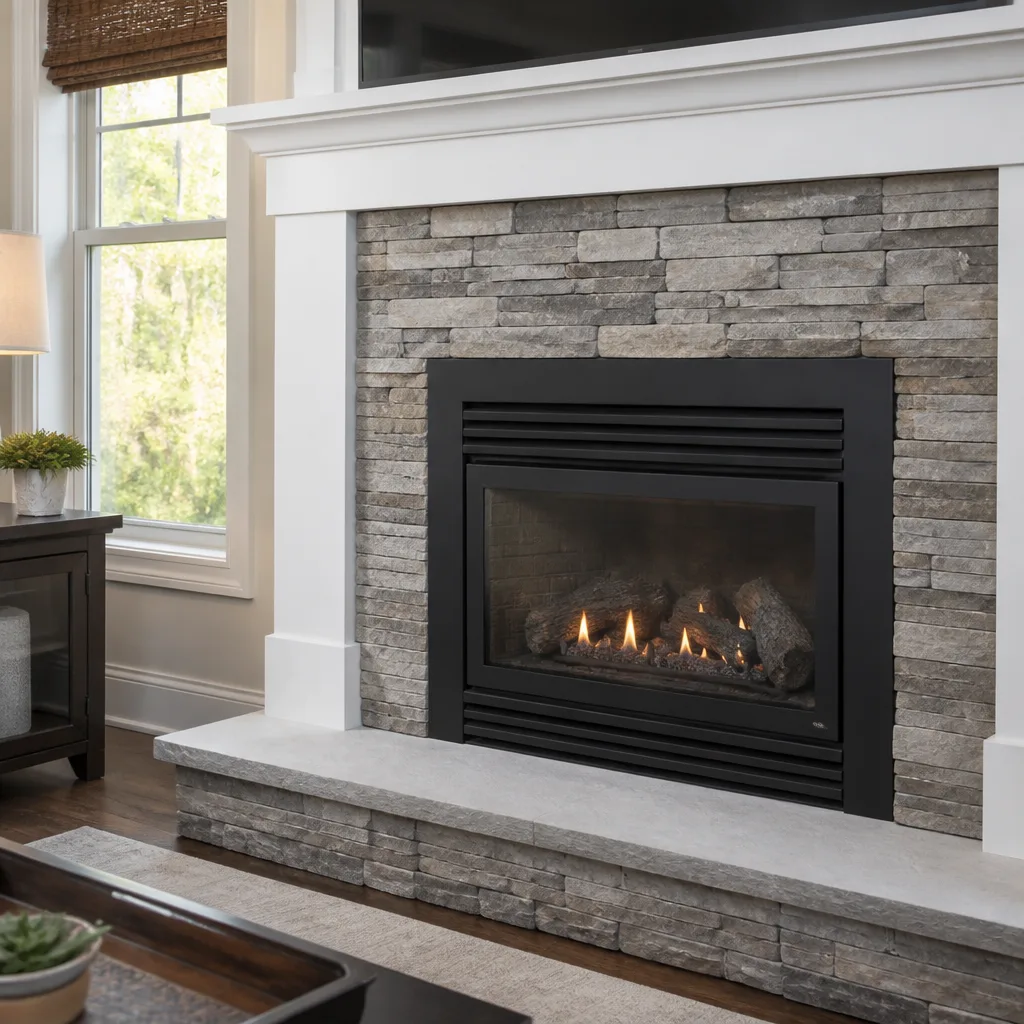
- Assuming a gas fireplace needs no chimney attention. Gas appliances produce corrosive condensation and can block flues with debris. Annual inspection is still required, even when the fire looks clean.
- Using chimney cleaning logs as a substitute for sweeping. These products may reduce light soot but cannot remove Stage 2 or 3 creosote, and they give homeowners dangerous confidence in a dirty flue.
- Ignoring the exterior until there’s a leak inside. By the time water shows on a ceiling in Bridgewater, the crown, flashing, or mortar damage is typically extensive. Exterior checks cost nothing; interior repairs cost thousands.
- Burning construction scraps or treated wood. Pressure-treated lumber, plywood, and painted wood release toxic chemicals and accelerate dangerous buildup. This is more common than it should be, especially after renovation projects.
- Skipping the post-season sweep because “it looks fine.” Creosote left in the flue over summer becomes acidic with humidity. In Bridgewater’s humid summers, this corrosion is accelerated. The sweep you skip in April becomes the liner replacement you need in October.
- Hiring based on lowest price without verifying credentials. New Jersey requires chimney sweeps to hold a home repair contractor registration for jobs exceeding $500. Ask for proof of insurance, written estimates, and documented inspection photos. If a sweep won’t show you what they found, they didn’t look.
- Running a fireplace with a damaged or missing liner. Unlined chimneys in older Bridgewater homes were grandfathered but are not safe by modern standards. Carbon monoxide can leak through mortar joints, and creosote can ignite in wall cavities. A liner is not optional luxury; it’s basic safety.
When to Call a Professional
Some conditions demand immediate professional evaluation. Do not attempt to assess these yourself:
- Any suspected chimney fire, even if it self-extinguished - thermal damage to liner and masonry may be hidden
- Carbon monoxide detector activation near the fireplace - this is an emergency, not a maintenance item
- Visible gaps or displacement in flue tiles - requires camera inspection to assess full extent
- Significant masonry damage, leaning chimney, or spalled brick on multiple faces - structural evaluation needed
- Water entry of unknown origin - the source is rarely where the stain appears
Hearthstone Chimney Co. offers free estimates in Bridgewater. Our Level-2 camera inspections end with photos you can see and a plain-English verdict - documented like an engineer, explained like a craftsman. Calls are answered by a live person 24 hours a day, 7 days a week. Background-checked, uniformed technicians complete most jobs in a single visit, with no-hassle upfront pricing so there are no surprises on the bill. Hearthstone Chimney Co. home or call (908) 589-8342 to schedule.
Frequently Asked Questions
A standard Chimney Cleaning & Sweep with Level-1 inspection in the Bridgewater area typically ranges from $150 to $300, depending on accessibility, flue condition, and whether the fireplace is a standard open hearth or a stove insert requiring additional disassembly. Level-2 camera inspections, recommended for real estate transactions or after chimney fires, run higher due to specialized equipment. Hearthstone Chimney Co. offers a $89 Seasonal Tune-Up for qualifying systems and provides no-hassle upfront pricing - the number on the estimate is the number on the invoice. Call (908) 589-8342 for an exact quote; estimates are free.
The National Fire Protection Association Standard 211 recommends annual inspection for all chimney systems, with sweeping as needed based on creosote accumulation. For Bridgewater households burning one cord or less of seasoned hardwood annually, a single sweep each spring or fall is typically sufficient. Households burning two or more cords, or using the fireplace as primary heat, should consider mid-season evaluation. Gas fireplaces require annual inspection despite clean-looking flames - corrosive condensation and debris accumulation still occur. Call (908) 589-8342 to discuss your burn rate and schedule appropriately.
You need a new liner when the existing one is damaged, improperly sized, or absent - not because a sweep says so without evidence. Cracked flue tiles, gaps between tiles, or an unlined chimney are documented with camera inspection photos you can see yourself. In Bridgewater’s older housing stock, unlined chimneys are common and do not meet modern safety standards. A properly sized stainless steel liner from DuraFlex or Olympia Chimney, properly insulated, protects against carbon monoxide leakage and improves draft efficiency. Hearthstone Chimney Co. provides written photo documentation before recommending liner work, and we offer a Free Second Opinion on any written estimate from another company. Call (908) 589-8342 if you’ve been told you need a liner and want verification.
Skipped maintenance leads to three predictable outcomes: creosote accumulation increases chimney fire risk; moisture entry degrades masonry and liner; and minor problems become major repairs. In Bridgewater’s climate, a cracked crown left untreated through one winter typically requires full rebuild rather than sealant by the following fall. Carbon monoxide exposure from deteriorated liners or blockages poses the most serious risk - it is odorless, invisible, and potentially fatal. The cost of routine sweeping is a fraction of emergency repair or hospitalization. Call (908) 589-8342 to schedule before burning season.
Homeowners can perform superficial firebox cleaning and ash removal safely. However, flue sweeping requires proper brushes, extension rods, and respiratory protection, and it does not include the critical camera inspection that reveals liner damage, hidden blockages, or construction defects. In New Jersey, chimney work exceeding $500 requires a home repair contractor registration. More importantly, DIY sweeping gives no documentation for insurance or resale purposes and cannot address Stage 3 glazed creosote, which requires professional rotary equipment. For safety and documentation, professional service is the sound choice. Hearthstone Chimney Co. provides photos and written reports with every inspection.
If our work is not done right, we make it right - backed in writing with no paperwork and no arguing. The 90-Day Done Right Promise, also called the Keystone Standard, covers all chimney cleaning, repair, and installation work performed by our technicians. It is governed by our K.E.Y.S. values: Krafted right, Every time, Your home first, Standing behind it. This is not a marketing phrase; it is a written guarantee that has defined our company for over 42 years. If you have concerns within 90 days of service, we return and resolve them at no additional cost.
The Bottom Line
A useful chimney checklist tells you what to do when you find something wrong, not just what to look for. In Bridgewater’s demanding climate - freeze-thaw cycles, humid summers, oak-heavy firewood - the difference between a pass and a stop-use condition can be subtle and consequential. Work through this guide seasonally, photograph your system annually, and never hesitate to call when a condition exceeds your comfort level. The cost of professional evaluation is modest; the cost of guessing is not. Done right, and we stand behind it.
For fireplace installation, repair, and upgrade services, see our Fireplace Services in Bridgewater page. For all chimney needs, Hearthstone Chimney Co. home is your starting point.
Written by Russell Haines, Owner at Hearthstone Chimney Co., serving Bridgewater since 2014.